MDR vs Managed SOC: Which Is Right for a Small or Mid-Sized Business?
 Cybergen InsightsCREST-certified security team
|
|
9 min read
If you run a small or mid-sized business and start shopping for round-the-clock security monitoring, you quickly meet two phrases: managed detection and response (MDR) and managed SOC, sometimes sold as SOC as a service. Both promise experts watching your systems day and night. Both sound like what you need. And providers often use the terms so loosely that it is hard to tell them apart.
The difference matters, because it decides what happens at the worst possible moment: when an attacker is inside your network at 2am and somebody has to act. This guide explains what each service does, where they overlap, the one question that separates them and how to choose.
The Short Answer
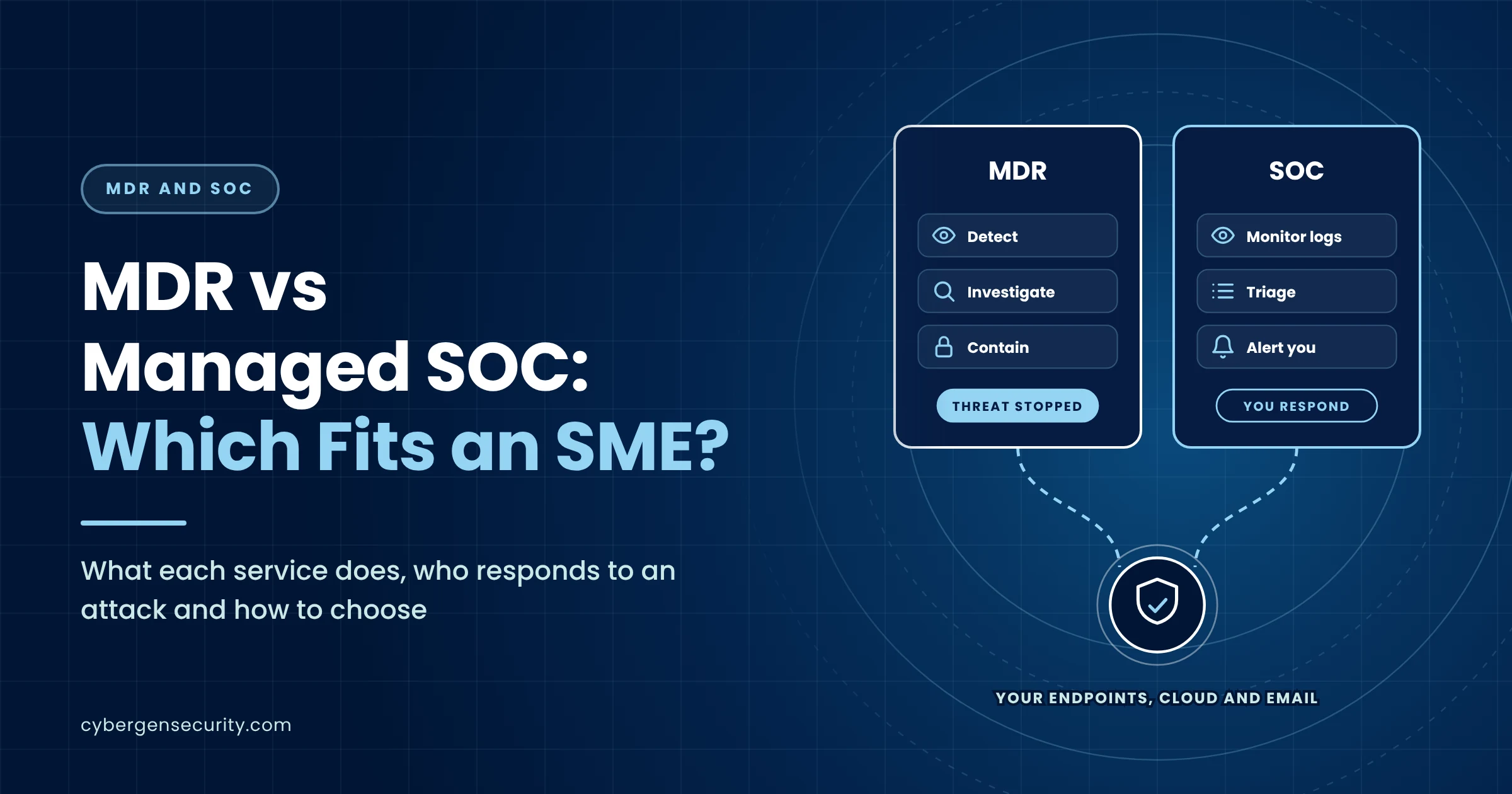
MDR is built to find and stop attacks. A managed SOC is built to monitor and report on security events across your systems. In practice, the biggest difference for an SME is usually who responds. A good MDR service investigates threats and takes action to contain them, within limits you agree in advance. Many managed SOC services, especially at lower price points, raise an alert and leave the response to you.
If you have little or no in-house security team, you need a service that responds, whatever it is called. If you have your own analysts and strict log retention or reporting duties, a managed SOC or a combination of both may suit you better.
What Is MDR?
Managed detection and response is a service in which a provider runs detection technology across your estate, typically endpoints, identities, cloud services and email, and staffs it with analysts around the clock. When something suspicious happens, they investigate, decide whether it is a real threat and act to contain it: isolating a device, disabling an account, revoking sessions or blocking malicious infrastructure. Then they guide you through clean-up and tell you what happened.
The emphasis is on outcomes rather than alerts. You are buying a team that will stop an attack, not a feed of notifications. That is why MDR has become the default choice for organisations that cannot build their own security operations. Our 24x7x365 MDR service works this way.
What Is a Managed SOC?
A security operations centre (SOC) is the team and technology that watches for attacks and responds to them. The NCSC's SOC buyer's guide describes its purpose as limiting the damage from attacks that get past preventative controls, and notes there is no one-size-fits-all SOC.
A managed SOC, or SOC as a service, outsources that function to a provider. It is often built around a SIEM (security information and event management) platform that collects logs from many systems, from firewalls and servers to business applications, and correlates them to spot threats. That breadth makes managed SOCs strong on log retention, compliance reporting and visibility across complex estates.
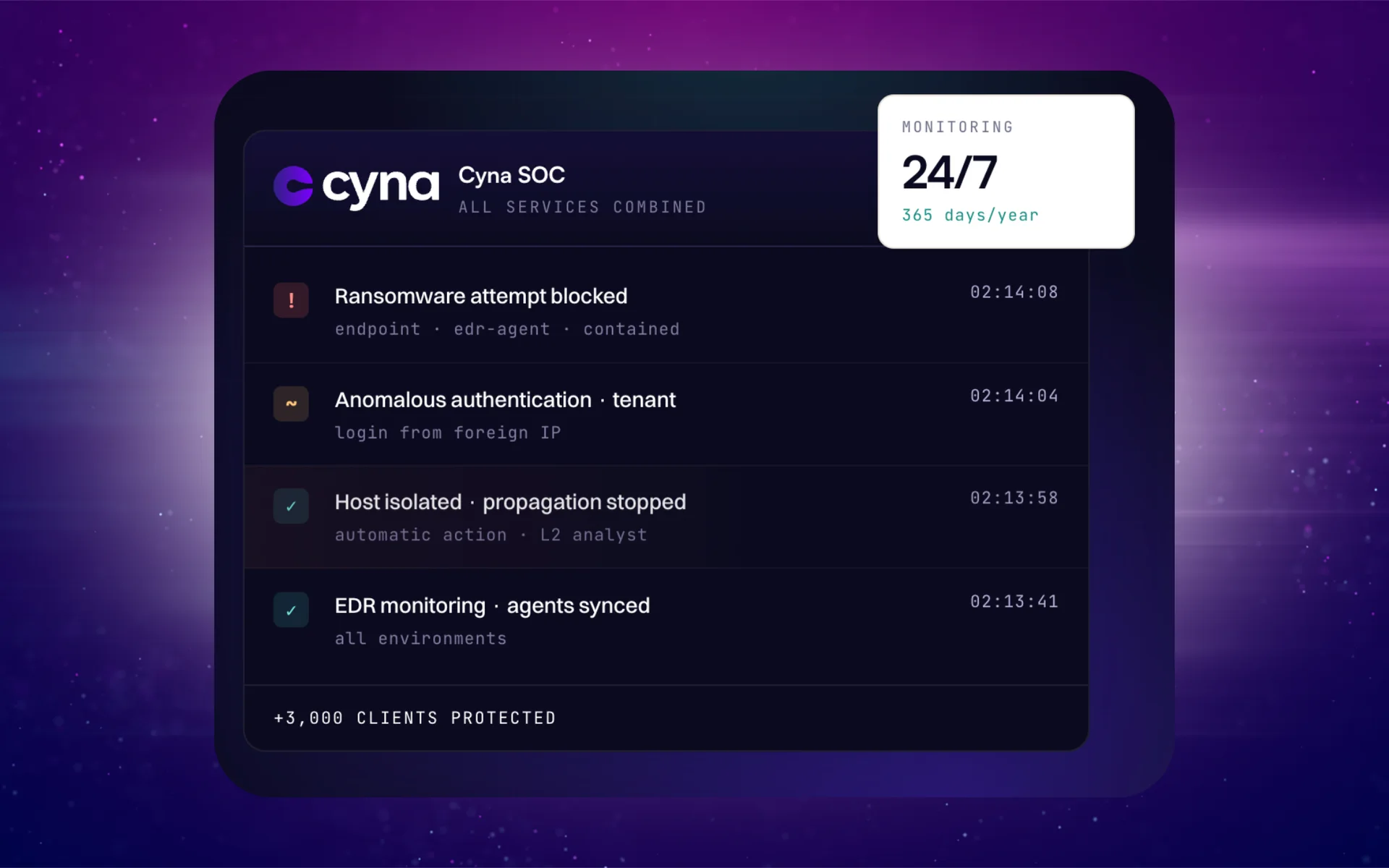
What a managed SOC does when it finds something varies widely. Some include full investigation and response. Others triage the alert and pass it to your team with advice, and charge separately for incident response. Some services sold as a managed SOC are, in effect, MDR. Our partner Cyna, for example, runs a managed SOC built around leading EDR, with analysts who investigate and respond.
MDR vs Managed SOC Side by Side
Because the market uses both terms loosely, treat the comparison below as a guide to typical services rather than a fixed definition.
MDR or managed SOC?
Providers use both terms loosely. Always check what a service actually includes, not what it is called.
The Question That Matters Most: Who Responds?
For a small or mid-sized business, the most important line in any proposal is what happens after a threat is confirmed. Picture the same attack under two different services.
A suspicious login at 2am on a Saturday
With response included
- The platform flags an impossible-travel sign-in
- An analyst confirms the account is compromised
- Sessions are revoked and the device is isolated
- You wake up to a report of what happened and what was done
With alerting only
- The same sign-in raises an alert
- An analyst triages it and emails or calls your contact
- Someone on your side has to log in and act
- If nobody answers, the attacker keeps working
The second scenario is not a failure of the provider. It is the service working as designed. It only becomes a problem when the buyer assumed they were getting the first. If you do not have someone who can respond at any hour, make sure your provider does, and that they have written authority to act.
That gap is common. The government's latest Cyber Security Breaches Survey found that only a quarter of businesses have a formal incident response plan, even though 43% identified a breach or attack in the previous year.
Which One Fits Your Business?
Use the check below to see which way your needs point. Most SMEs lean towards MDR. Organisations with their own security team, a SIEM already in place or heavy reporting obligations often lean towards a managed SOC, or a mix of both.
Which way do you lean?
Tick the statements that are true for your organisation.
Nothing you tick is sent or stored. Many organisations end up with a mix of both.
When MDR Is the Better Fit
MDR usually suits you if you have no dedicated security staff, your IT team or provider is not on call overnight, and your biggest worries are ransomware, phishing and stolen accounts. Those attacks move fast, often outside office hours, and the endpoint, identity and email signals that MDR watches are where they show up first.
When a Managed SOC Is the Better Fit
A managed SOC makes sense if you already employ people who can respond, run a SIEM or many systems whose logs need correlating, or must retain logs and produce reports for auditors, regulators or customers. Our SIEM and log management service covers that need.
When You Need Both
Many growing organisations end up combining the two: MDR for fast detection and response, and log monitoring for retention, reporting and wider visibility. What matters is that they are joined up, so an alert in one reaches people who can act.
Do You Need a SOC at All?
Not every organisation needs a full SOC. In its blog post To SOC or not to SOC?, the NCSC argues that some systems designed to be secure from the outset, particularly cloud-native ones, need much less monitoring than a traditional estate. It still expects monitoring for endpoints and traditional infrastructure, and that is where most SME risk sits.
The practical lesson for a small business is to buy for the threats you actually face, not the biggest service available. For most, that means strong basics, good backups, multi-factor authentication everywhere and someone watching and responding around the clock.
Questions to Ask Any Provider
Whatever the service is called, these questions reveal what you are really buying:
- Which actions can your analysts take on our behalf, and do you need our approval first?
- What happens when you confirm a threat at 2am on a Sunday?
- Which of our systems will you monitor: endpoints, identities, cloud, email, network?
- Is incident response included, or charged separately?
- How quickly do you investigate and respond, and is that in the contract?
- What will we receive each month, and who explains it to our leadership?
- Can we see a redacted example of a real incident report?
Our guide on how to choose an MDR provider goes deeper on each of these.
How Cybergen Can Help
Cybergen's 24x7x365 managed detection and response combines AI-assisted triage with expert analysts across your endpoints, identities, cloud, email and network. We do not just alert you. We contain threats and see them through to remediation. Where you need broader log monitoring or compliance reporting, we add SIEM and log management, and through our partnership with Cyna we offer a managed SOC built for organisations without their own security team.
If you are comparing services, speak to our team. We will help you work out what you need, even if the answer is less than you expected.
Frequently Asked Questions
Is MDR the same as SOC as a service?
Not quite, although the terms overlap and some providers use them interchangeably. MDR is built around detecting and responding to threats on your endpoints, identities, cloud and email. SOC as a service usually means outsourced security monitoring, often across a wider set of logs, and may or may not include hands-on response. Check the scope rather than the label.
Does a small business need a SOC?
Most small businesses do not need to build their own security operations centre. They do need someone watching for attacks around the clock and able to act quickly. For most SMEs, an MDR service or a managed SOC that includes response gives that cover without hiring a team.
Can we have MDR and a managed SOC together?
Yes. Some organisations use MDR for fast detection and response on endpoints and identities, alongside a managed SIEM or SOC service for log retention, compliance reporting and correlation across other systems. The key is that the two are joined up, so an alert in one reaches the people who can act in the other.
What does 'response' actually mean in an MDR contract?
It should mean named actions the provider can take on your behalf, such as isolating a device, disabling an account, revoking sessions or blocking a malicious domain, plus the authority to take them without waiting for you in an emergency. Ask for this in writing, along with response times and what happens out of hours.
We already have an EDR tool. Do we still need MDR?
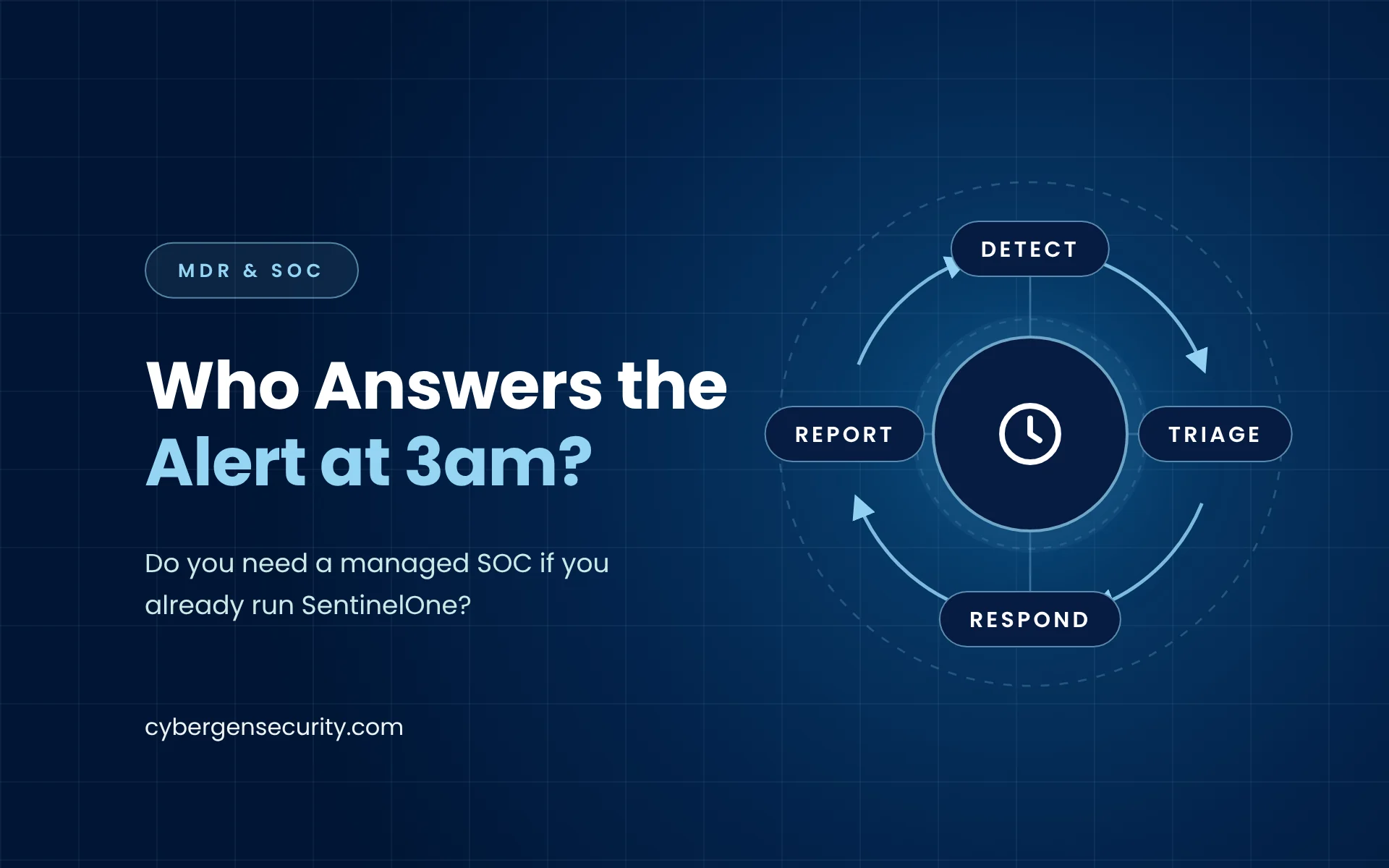
A detection tool produces alerts. Someone still has to investigate them, decide which are real and act, at any hour. MDR provides that team. Our article on whether you need a managed SOC if you already run SentinelOne looks at this question in detail.
Sources
CREST-certified consultants with over 100 years of combined experience in threat intelligence, penetration testing, MDR and compliance.