TfL Takes Its Oyster Photocard Website Offline After a Breach Exposes 265,000 Customers: Why Stolen Security Answers Are a Long-Term Problem
 Cybergen Cyber NewsCREST-certified security team
|
|
6 min read
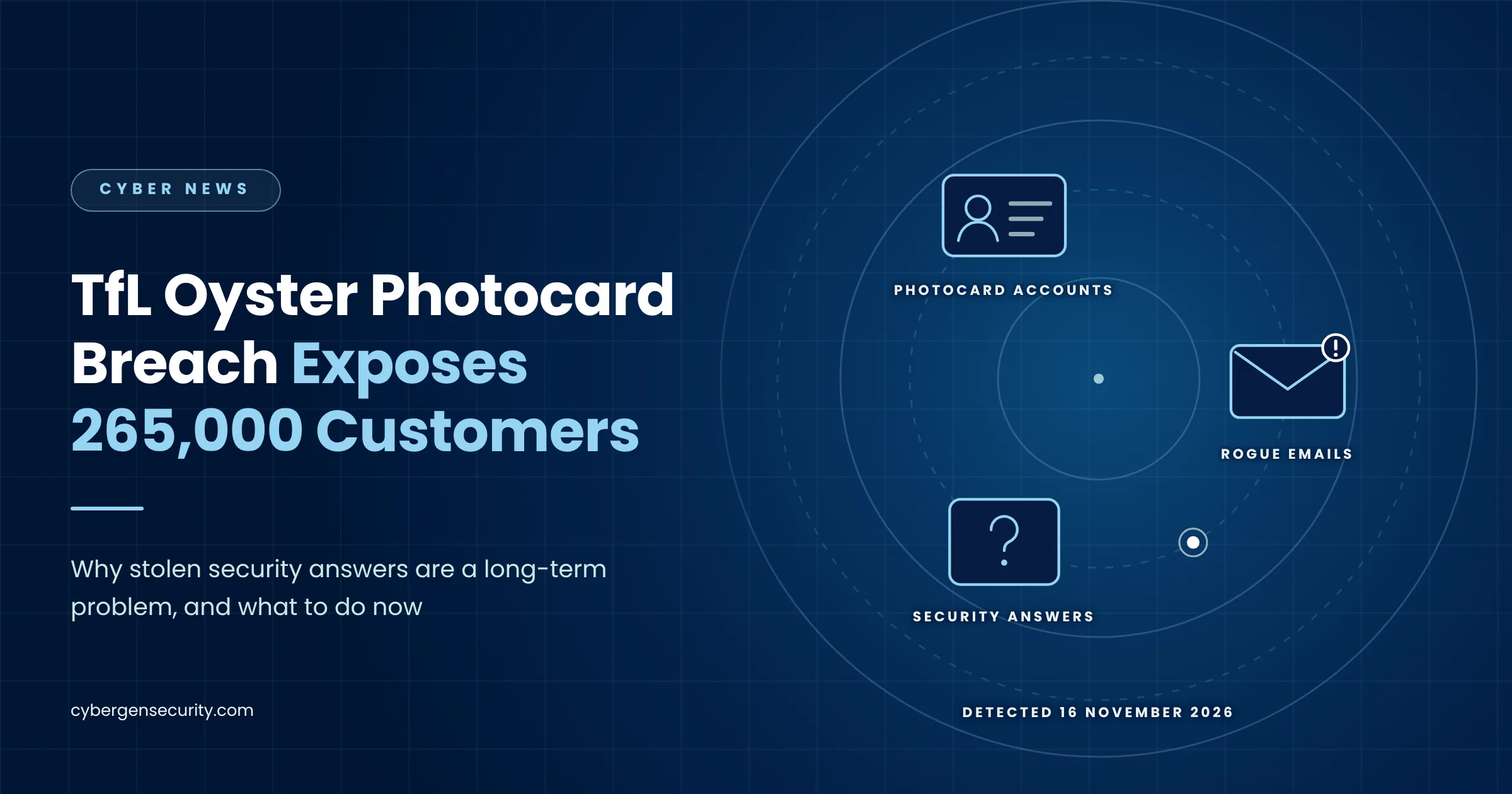
On Monday 16 November 2026, Oyster photocard holders in London started receiving emails asking them to create an account they already had. The messages came from Transport for London's own systems, but TfL had not sent them. They were the first visible sign that attackers had got into the website that manages photocards for children, students, apprentices, care leavers, veterans and Londoners aged 60 and over.
TfL took the photocard website offline the same day. It now says the account details of around 265,000 customers may have been exposed, up from an earlier estimate of about 250,000, and that the figure could rise as its investigation continues. Names, home addresses, dates of birth and the answers to account security questions are among the details that may have been taken.
What Happened
TfL says it became aware of the incident on 16 November, when existing photocard account holders received emails inviting them to set up an account. The emails were sent from TfL's own mail systems but were unauthorised and were triggered by the compromise. TfL took the photocard website, photocard.tfl.gov.uk, down while it investigated and says the incident has now been contained.
Customers who may be affected were contacted from Wednesday 18 November. TfL has notified the Information Commissioner's Office and says it has found no evidence so far that the data has been misused. It has not said how the attackers got in or who is behind the attack, and nothing published so far links this incident to the 2024 attack on TfL.
Shashi Verma, TfL's director of technology strategy and revenue, apologised to affected customers and said the organisation hopes to restore the website as quickly as possible. No date has been given.
Who Is Affected
The breach involves accounts on the photocard website, which serves six schemes: Zip Oyster for children and young people, 18+ Student, 18-25 Care Leaver, 60+ London, Apprentice and Veterans Oyster. According to the breach notifications sent to customers, the details that may have been exposed are:
- Full names
- Email addresses and phone numbers
- Home addresses
- Dates of birth
- Account security questions and answers
TfL's initial assessment is that passwords, bank and payment card details, journey histories, customer photos, and the names and dates of birth of children who hold Zip Oyster cards were not taken. Freedom Pass applications are handled by London Councils and are not affected.
Photocards still work at ticket barriers. While the website is offline, customers who need to renew a card or check their journey history have to contact TfL customer services.
Why It Matters
A password can be changed in seconds. The answer to a question such as a first school or a mother's maiden name usually cannot, and people often give the same answers on many websites. Once those answers are in a criminal's hands, they can be used to get past account recovery checks elsewhere for years. That is why TfL is asking customers to change their security questions as well as their passwords, and to do the same on any other site where they used the same answers.
The mix of data also suits targeted scams. A message that quotes someone's name, address, date of birth and photocard type will look convincing, and the people affected include older Londoners, young people and care leavers, who are often singled out by fraudsters. The first sign of this breach was itself an email sent from TfL's real systems, which shows how hard it can be for a customer to tell a genuine message from a malicious one.
This is also TfL's second serious incident in two years. The 2024 attack, linked to the Scattered Spider group, led TfL to notify more than 7 million customers and cost it around £29 million. Two of the people responsible pleaded guilty earlier this year.
What To Do Now
If you hold an Oyster photocard, ignore the account creation email. Do not click links in unexpected messages that claim to come from TfL, and go to the TfL website directly instead.
Change reused security answers. If you used the same security questions and answers on other sites, change them there now. When the photocard site returns, TfL will prompt everyone to set a new password, question and answer.
Change reused passwords. TfL does not believe passwords were taken, but if you used your photocard password anywhere else, it is worth changing it.
Be wary of calls and messages that know your details. Anyone who quotes your address or date of birth back to you is not proving who they are. Report anything suspicious to TfL.
For organisations running customer portals, review account recovery. Security questions are weak protection. Where you can, replace them with one-time codes or passkeys, and treat any stored answers as sensitive data.
Watch the messages your systems send. Alert on unusual spikes in sign-up, password reset or notification emails. In this case, customers spotted the problem before anyone else did.
How Cybergen Can Help
Cybergen's application security and penetration testing work can check customer portals for weaknesses in registration, password reset and account recovery, and our email security team can help you spot misuse of your own mail systems. If you are dealing with a breach, our incident response service can help you contain it and plan your next steps.
Frequently Asked Questions
Were bank details or passwords stolen?
TfL's initial assessment is that passwords, bank and payment card details and journey histories were not taken. The details that may have been exposed are names, email addresses, phone numbers, home addresses, dates of birth and security questions and answers.
Is my child's data affected?
TfL says the names and dates of birth of children who hold Zip Oyster cards were not taken. Details held about the adult who manages the account may have been exposed.
Can I still use my photocard?
Yes. Photocards remain valid for travel. While the website is offline, contact TfL customer services to renew a card or check your journey history.
Is this linked to the 2024 TfL attack?
Nothing published so far links the two incidents. TfL has not said who is behind this breach or how the attackers got in.
What should I do first?
Ignore the unexpected account creation email, change any security answers you have reused on other websites, and be cautious of anyone who contacts you quoting your personal details.
Sources
- BleepingComputer: Transport for London breach exposes 265,000 Oyster card users' data (19 November 2026)
- The Register: TfL takes Oyster photocard website offline after attackers compromise customer accounts (19 November 2026)
- IanVisits: TfL cyber attack may have exposed data of 265,000 Oyster photocard users (19 November 2026)
CREST-certified consultants with over 100 years of combined experience in threat intelligence, penetration testing, MDR and compliance.