Malicious Code Served Through Optimizely Hits Visitors to 178 Major Websites: How One Trusted Script Became a Card Skimmer
 Cybergen Cyber NewsCREST-certified security team
|
|
7 min read
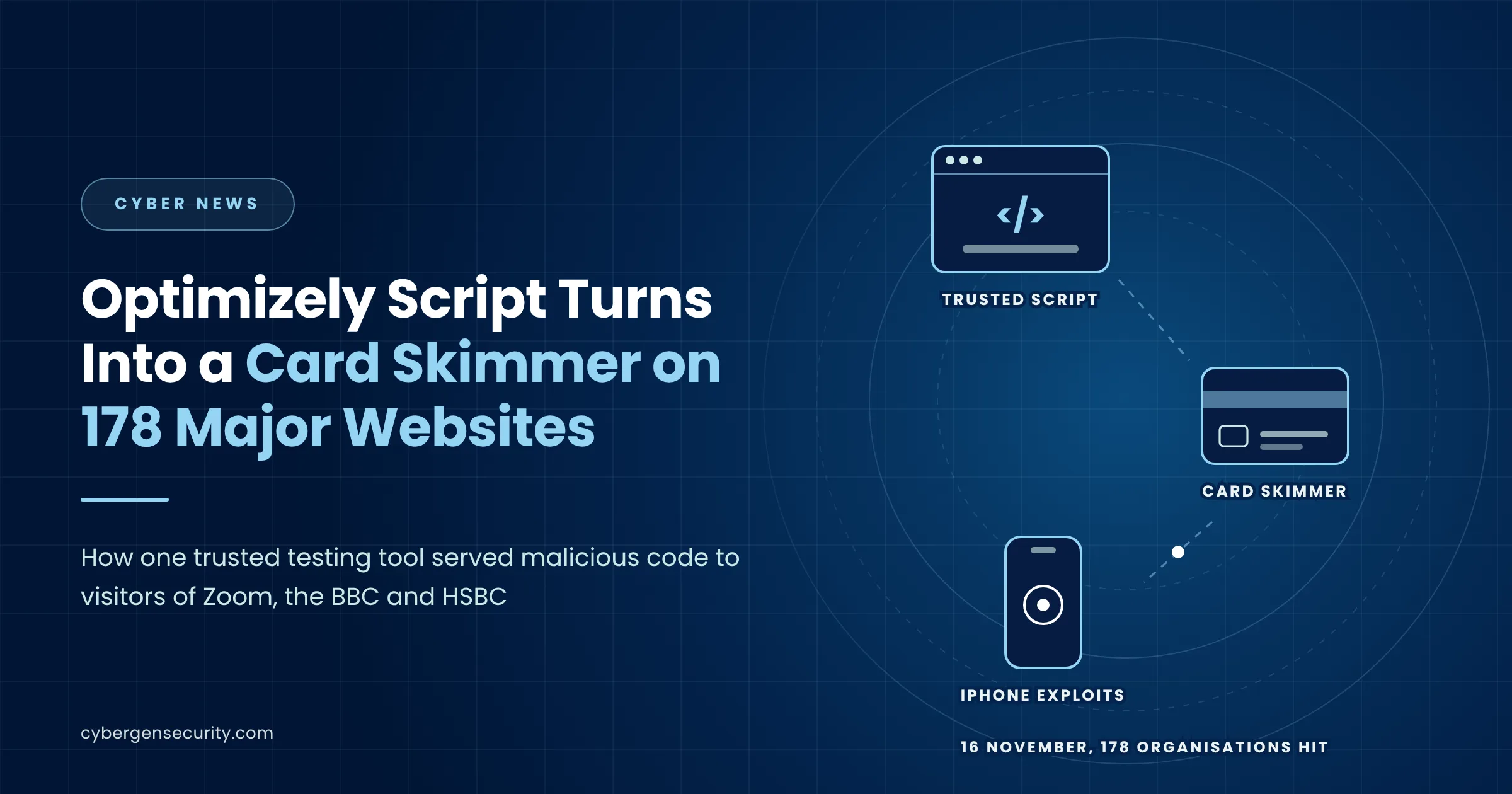
For most of Monday 16 November 2026, visitors to some of the best-known websites in the world were served malicious code they could not see. The code did not come from the sites themselves. It came through Optimizely Web, a popular tool that companies use to run A/B tests and personalise their pages, and it ran inside the browser of anyone who loaded an affected page.
Researchers at Report URI, led by Scott Helme, found 188 infected Optimizely snippets belonging to 178 organisations, including Zoom, the BBC, CNN, HSBC, IKEA, Salesforce, GitLab, Equifax, Air France-KLM, Ledger, Peacock and Smartsheet. Optimizely's own website and login portal were serving the code too. The payload swapped cryptocurrency addresses, skimmed card details from some checkout forms, sent cookies and screenshots to the attacker and pushed exploit kits to older iPhones.
What Happened
Websites that use Optimizely Web load a small JavaScript snippet from Optimizely's servers on every page view. That snippet carries each customer's experiments and any custom code they have added. On 16 November an unauthorised party changed the contents of those snippets, so the attacker's code was delivered by Optimizely's own delivery network to every visitor of every affected page.
Optimizely has confirmed that the attacker exploited a vulnerability in its Experimentation product. In a status notice published at 01:02 UTC on 17 November, it said it had fixed the vulnerability, removed the injected code, secured affected accounts and added protections against unauthorised code delivery. It has not described the vulnerability or said how many customer projects were changed.
How the Attack Unfolded
Based on the timeline published by the researchers, all times UTC on 16 November:
- 04:21: the first injection appears in the BBC's Optimizely snippet.
- 08:28: the main payload, a file named track.js, is first seen on bbc.com.
- 13:03: stolen cryptocurrency starts moving to exchange deposit addresses.
- 13:43: a card skimmer is added to the payload.
- Around 19:30: the researchers' sweep finds the malicious code.
- 23:11: all infected Optimizely files are clean. TalkTalk's snippet was the last one still infected.
The operator rebuilt the payload 26 times during the day, adding features while the attack was running.
What the Code Did
The payload had four jobs. It looked for cryptocurrency wallet addresses on the page, across Bitcoin, Ethereum, Solana, TRON and several other chains, and replaced them with the attacker's own. It captured card numbers, expiry dates and security codes typed into forms on the page, although card fields inside hosted payment frames were out of its reach. Near payment or wallet wording, it sent the page address, any cookies readable by scripts and a screenshot back to the attacker.
A separate script sent iPhone and iPad users to exploit kits aimed at iOS 13 to 18. The researchers confirmed that the exploit pages were delivered, but no successful device compromise has been publicly confirmed. The attacker's wallets received about $7,150, mostly in Bitcoin. Nobody yet knows how many card numbers, cookies or screenshots were taken.
Who Is Affected
Banking and finance was the most affected sector, with 32 organisations, followed by technology and software with 23 and retail and fashion with 20. The rest span 12 other sectors. The researchers expect the true total to be higher, because they could only scan the snippets they could find.
Anyone who visited an affected site on 16 November may have loaded the code. The risk is highest for people who typed card details into a form on the page itself, made a cryptocurrency payment, or browsed on an iPhone or iPad running an older version of iOS.
Why It Matters
This is a supply chain attack on the browser. None of the 178 organisations had their own servers broken into. One compromised supplier was enough to reach all of their visitors at once, and from the visitor's point of view the code came from a site they trusted.
Most websites load dozens of third-party scripts for analytics, testing, chat and advertising, and each one runs with the same power as the site's own code. The researchers found that only around 15 per cent of the sites they tested had a Content Security Policy strict enough to block the payload. Allowing Optimizely's domain did not help, because the malicious loader came from that same trusted domain. Settings that Optimizely's own documentation asks customers to allow, such as unsafe-eval, weakened protection further.
What To Do Now
If your organisation uses Optimizely, check your project code. Review Project JavaScript and experiment code for scripts you do not recognise, encoded strings or calls such as atob().
Ask Optimizely directly. Ask whether your project IDs were modified on 16 November, and when.
Rotate access. Review the users, API tokens and integrations on your Optimizely account and rotate them.
Treat 16 November data as exposed. Card data entered on your own forms that day, and any secrets held in cookies that scripts can read, should be treated as compromised. Consider whether customers need to be told.
Tighten your Content Security Policy. Restrict where scripts can load from and send data to, and remove unsafe-eval and strict-dynamic where you can. Start in report-only mode to see what would break.
Keep third-party scripts off payment pages. Use hosted payment fields so card data never touches your page, and load as little as possible on checkout.
If you visited an affected site on 16 November, update iPhones and iPads to iOS 18.7.3 or later, or iOS 26.3 or later, check that any cryptocurrency payment made that day went to the address you intended, and watch your card statements for purchases you do not recognise.
How Cybergen Can Help
Cybergen's application security and web application testing work can review the third-party scripts running on your site and test whether your Content Security Policy would stop an injection like this one. If you think your site or your customers were affected, our incident response service can help you work through the next steps.
Frequently Asked Questions
Was Optimizely itself hacked?
Optimizely has confirmed that an unauthorised party exploited a vulnerability in its Experimentation product to add malicious JavaScript to some customer projects. It says the flaw is fixed but has not given technical details.
Were the affected websites breached?
Not in the usual sense. Their own servers were not broken into. They loaded a trusted script from Optimizely that had been tampered with, so the malicious code reached their visitors through that script.
Is the malicious code still live?
No. The researchers found all known infected Optimizely files clean by 23:11 UTC on 16 November, and Optimizely says it has removed the injected code and added protections.
Was my card stolen?
Only card details typed into forms on an affected page were at risk. Payments made through hosted payment fields were out of reach. If you bought something on an affected site on 16 November, check your statements and contact your bank about anything you do not recognise.
Are iPhones safe now?
Devices running iOS 18.7.3 or later, or iOS 26.3 or later, are treated as patched against the exploit kits that were delivered. Older devices should be updated.
Sources
- SOCRadar: Optimizely attack hits Zoom, BBC, CNN with skimmer and iOS kits (17 November 2026)
- StepSecurity: OPTIMJACK, Optimizely-hosted scripts loaded a crypto clipper and card skimmer on 178 organisations (17 November 2026)
- Cybernews: Optimizely script attack hit 178 major websites (17 November 2026)
CREST-certified consultants with over 100 years of combined experience in threat intelligence, penetration testing, MDR and compliance.