
AI-Powered Threat Detection: How Cybergen and TrendAI Secure Modern Enterprises


September 14, 2026

Introduction

Security teams have spent the last decade consolidating tools, only to watch the tool count climb again. A typical enterprise now runs a patchwork of endpoint agents, cloud posture scanners, email gateways, and a SIEM that ingests all of it into one very noisy queue. Meanwhile, the attackers on the other side of that queue are using generative AI to write convincing phishing lures, automate reconnaissance, and probe for weaknesses far faster than a stretched SOC team can triage alerts by hand.


That gap between attacker speed and defender capacity is exactly what Cybergen's partnership with TrendAI is built to close. This post explains what AI-native security actually means, where most existing security stacks fall short, and how we integrate TrendAI's Vision One platform into the detection, response, and compliance work we already do for clients.

What Is AI-Native Security?

Think of a traditional security stack like a house with a separate alarm system, smoke detector, and camera, each bought from a different supplier, each with its own app, and none of them talking to each other. If a window breaks at 2am, three separate alerts fire, none of them tell you it's the same event, and someone still has to work out what actually happened.


AI-native security is the equivalent of rewiring that house so every sensor reports into one system that understands the difference between “a window broke” and “a window broke, then the back door opened, then a device connected to the router.” It does not replace the sensors. It correlates what they see, applies AI models trained specifically on attacker behaviour, and surfaces the handful of events that genuinely need a human's attention instead of the hundreds that do not.

The Three Pillars of a Modern Security Operation

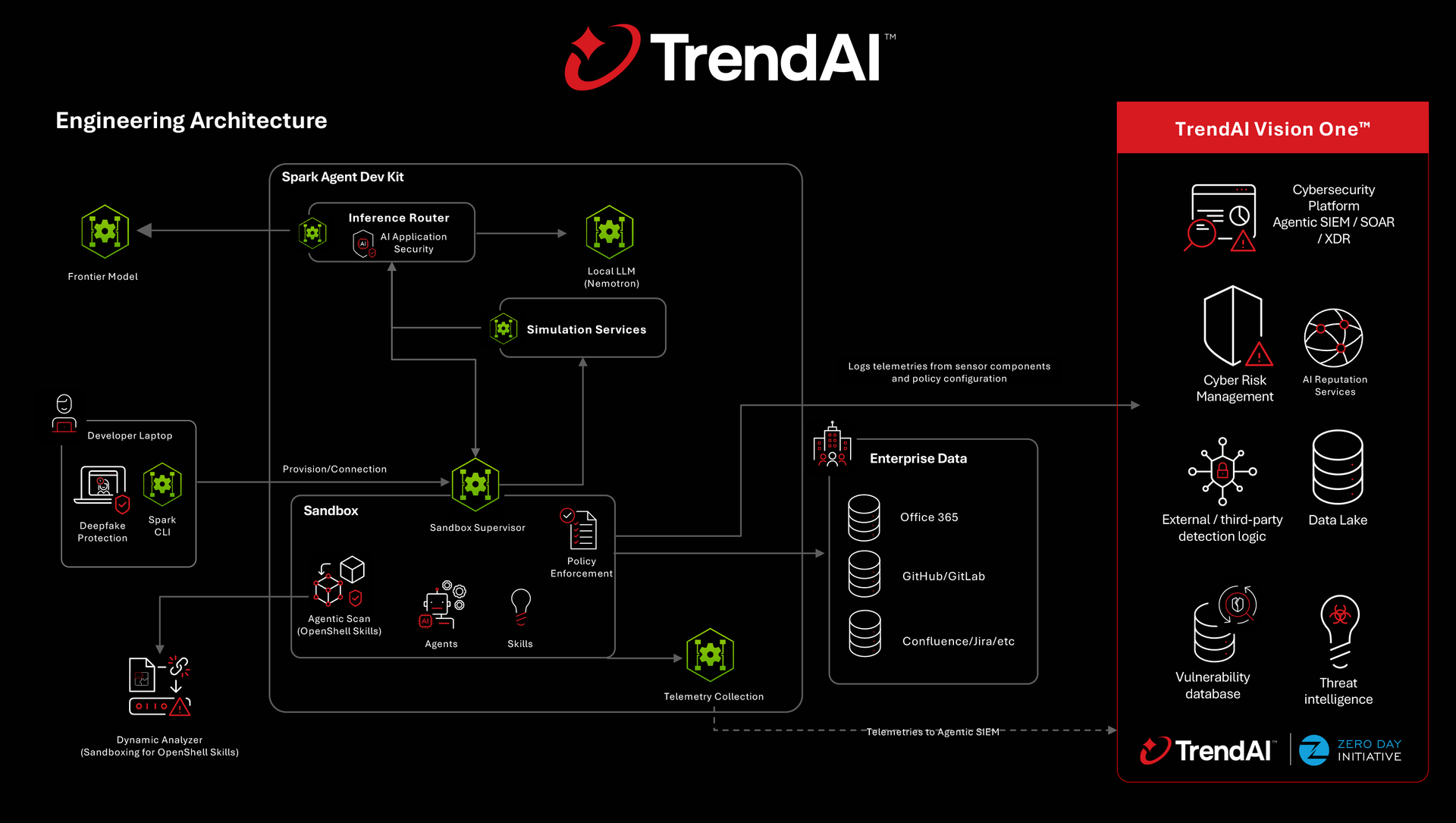
TrendAI's Vision One platform is built around three connected capabilities, and understanding each one helps explain why the combination matters more than any single part.


Cyber Risk Exposure Management continuously maps your attack surface, meaning every internet-facing asset, cloud misconfiguration, and unpatched system, and scores it by how likely it is to actually be exploited rather than just how severe the CVE sounds on paper.


Security Operations, covering XDR, agentic SIEM, and SOAR, is where detection and response actually happen. Telemetry from endpoints, cloud, email, identity, and network all lands in one place, and AI-driven correlation reduces what would be thousands of raw alerts down to a small number of investigable incidents.


Threat Intelligence feeds both of the above with research from TrendAI's global threat research division and Zero Day Initiative, so the exposure scoring and detection logic are grounded in what attackers are actually doing right now, not a static ruleset from last year.

Where Traditional Security Stacks Fall Short

Most of the enterprises we work with are not lacking in security tools. They are lacking in time, and the current approach makes that worse in a few specific ways:


• Tool sprawl creates blind spots. Endpoint, email, cloud, and identity tools each see a slice of an attack, but nobody sees the whole chain until an analyst manually stitches the logs together, usually after the fact.


• Alert fatigue is real. When every tool raises its own alerts with its own severity scale, analysts either burn out triaging noise or start ignoring alerts altogether, and it is never obvious in advance which one was the real one.


• Response speed has not kept pace with attack speed. Attackers using AI to automate reconnaissance and lure generation can move within hours. A stack that depends on manual correlation across disconnected consoles cannot match that.


• Compliance reporting becomes a separate project. Evidencing controls for ISO 27001, DORA, or NIS2 often means exporting data from five systems by hand rather than pulling it from one place.

Introducing TrendAI: One Platform for the AI Era

TrendAI is the AI-powered security platform from Trend Micro, and it is one of the most independently validated platforms in the market for exactly the problem described above.


What it covers:


• Cyber Risk Exposure Management across your full attack surface

• XDR, Agentic SIEM, and SOAR for unified detection and automated response

• Cloud, data, email, endpoint, identity, and network security modules under one console

• Managed Detection and Response, incident response, and cyber risk advisory services

• Red and purple teaming to test the defences the platform builds


A few things set it apart from a typical point solution. TrendAI has been named a Leader in Gartner's Magic Quadrant for Endpoint Protection Platforms for 21 consecutive years, which is not a claim many vendors in this space can make. In June 2026, TrendAI joined Anthropic's Project Glasswing, applying frontier AI models to vulnerability discovery ahead of exploitation.


It is also a member of NVIDIA's Open Secure AI Alliance, and currently ranks first on the CyberGym benchmark with a 97% exploit-remediation score, a measure of how reliably a platform actually fixes what it finds rather than just flagging it.


The numbers back up the platform claims too. An independent economic validation by the Enterprise Strategy Group found that TrendAI Vision One can reduce cybersecurity costs by 70%, cut data breach risk by 17%, and lower security team turnover by 20% (turnover drops when analysts stop drowning in false positives). Richard Harrison, CISO at Foodstuffs South Island, has credited the platform with a 1,000% improvement in visibility across his environment.

How Cybergen Integrates TrendAI Into Your Security Operations

TrendAI gives your organisation the platform. Cybergen is the team that configures, tunes, and operates it as part of the wider service we already provide.


Initial setup and onboarding. We map your existing environment, connect Vision One to your endpoints, cloud accounts, email, and identity systems, and tune the exposure scoring against your actual risk profile rather than deploying it with generic defaults.


Continuous monitoring. Once live, Vision One's telemetry feeds directly into our 24x7x365 MDR service, so AI-correlated incidents are reviewed by Cybergen analysts around the clock, not just flagged and left in a queue.


Human-led triage. AI narrows thousands of signals down to the ones worth a look. Our analysts make the final call on every incident that matters, which keeps false positives from turning into unnecessary disruption for your team.

Integration with compliance and GRC work. Because exposure and incident data live in one platform, the evidence we need for ISO 27001, GDPR, DORA, or NIS2 reporting comes from the same source we use for day-to-day detection, instead of a separate reporting exercise.

What This Looks Like in Practice

Feature Benefit
Unified telemetry across endpoint, cloud, email, identity, and network One correlated view of an attack instead of five disconnected alerts
AI-driven exposure scoring Patch and remediation effort goes where it is actually likely to be exploited, not just where the CVSS score is highest
Agentic SIEM and SOAR Routine response steps are automated, freeing analysts for the incidents that need judgement
Cybergen-managed detection and response AI does the correlation, a trained analyst confirms before anything reaches your inbox

Who Is This For?

Enterprise security teams drowning in alerts. If your SOC is spending more time triaging noise than investigating real incidents, consolidating telemetry into one AI-correlated view is the fastest way to get time back.


Mid-market organisations without an in-house SOC. Vision One combined with Cybergen's MDR service gives you enterprise-grade detection and response without having to build and staff a security operations centre yourself.

Regulated businesses under DORA, NIS2, or GDPR. When exposure data and incident evidence live in one platform, compliance reporting stops being a separate scramble every audit cycle.

Ready to Bring AI-Native Security to Your Organisation?

Attackers are already using AI to move faster. Closing that gap means giving your security team a platform that correlates what is actually happening across your environment, backed by analysts who can act on it immediately.


Book a FREE TrendAI Vision One demo with the Cybergen team, or get in touch below to talk through what this would look like for your environment.

Ready to strengthen your security posture? Contact us today for more information on protecting your business.


Let's get protecting your business

Disaster Recovery

Keep your data secure and protected at all times.


Cybergen News

Sign up to get industry insights, trends, and more in your inbox.

Contact Us

SHARE THIS

Latest Posts

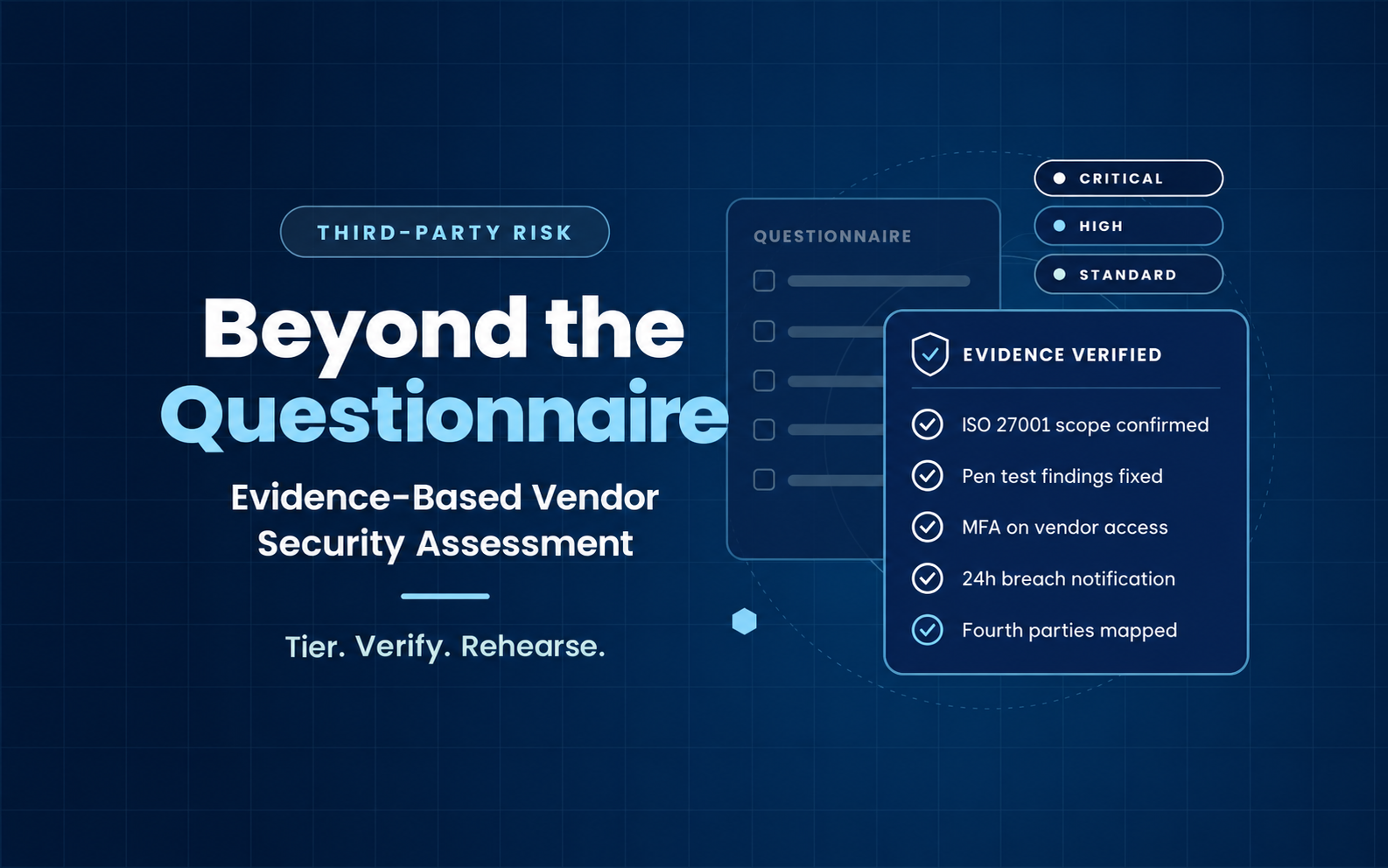
Blue security assessment slide titled “Beyond the Questionnaire” with vendor verification graphics
October 13, 2026
Vendor questionnaires create paperwork, not assurance. Learn how CISOs can tier suppliers, verify security evidence and rehearse a vendor breach before it happens.
Dark blue promotional banner reading “Bring Shadow AI Under Control” with smaller text about a 90-day plan.
October 9, 2026
Shadow AI is now the top concern for security leaders. A practical 90-day plan for CISOs to discover, classify and govern unapproved AI use without slowing the business.
Blue cybersecurity slide reading “Can You Actually Restore? A Cyber Recovery Testing Playbook for Security Leaders”
October 6, 2026
Backups are not a recovery plan until you have tested them under attack conditions. A practical playbook for CISOs to test, measure and evidence ransomware recovery.
Infographic on STIX and TAXII explained, with blue network diagram and labeled threat intelligence flow icons
October 3, 2026
What are STIX and TAXII? Learn how these open standards structure and share cyber threat intelligence, and how your SOC can use them to detect threats faster.
Blue tech-themed slide titled “How to Build a Cyber Threat Intelligence Program You Will Actually Use”
October 2, 2026
A practitioner's guide to building a cyber threat intelligence program: intelligence requirements, collection, analysis, SOC integration, metrics and a roadmap.

Cyber risk graphic with blue digital network background and text: “Your Supplier List Is Not a Resilience Plan.”
September 29, 2026
Learn how global enterprises can map supplier dependencies, find shared points of failure and strengthen third-party cyber risk management.
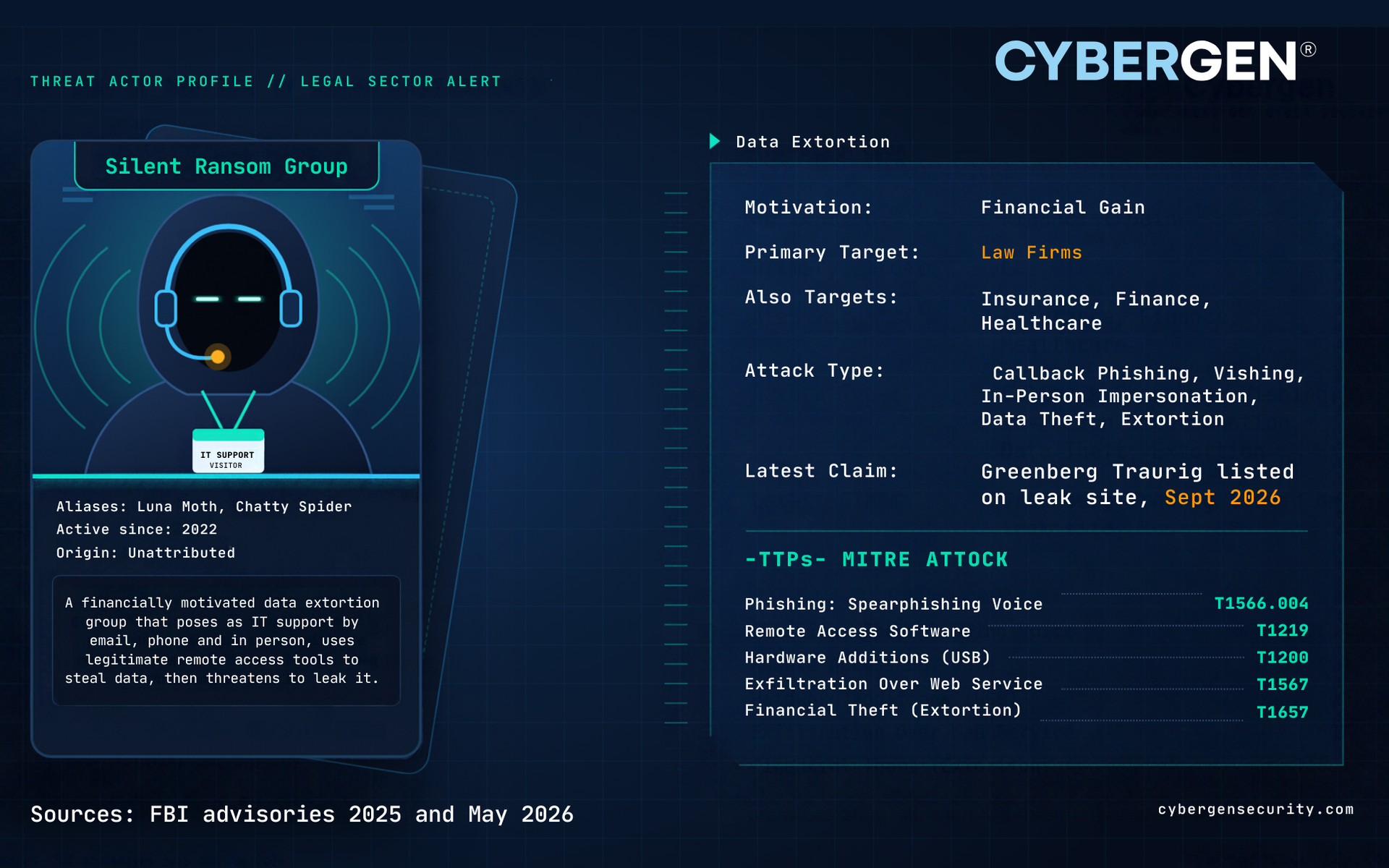
CyberGen dark blue dashboard with a central hooded avatar and security stats panel
September 28, 2026
Greenberg Traurig is the latest law firm hit as Silent Ransom Group targets the legal sector. Learn how these attacks work and how to protect your firm.
Glowing digital hand touching a touchscreen, with white connection lines and blue tech background
September 24, 2026
Non-human identities now outnumber employees by 50 to 1. Discover the risks of API keys, service accounts and AI agents, and how to secure them.

Blue skull with “RANSOMWARE” text and glowing digital lock icon on a dark cyber background
September 22, 2026
UK ransomware payment ban explained. Discover what public sector and CNI organisations need to do now to strengthen resilience, recovery and incident response.
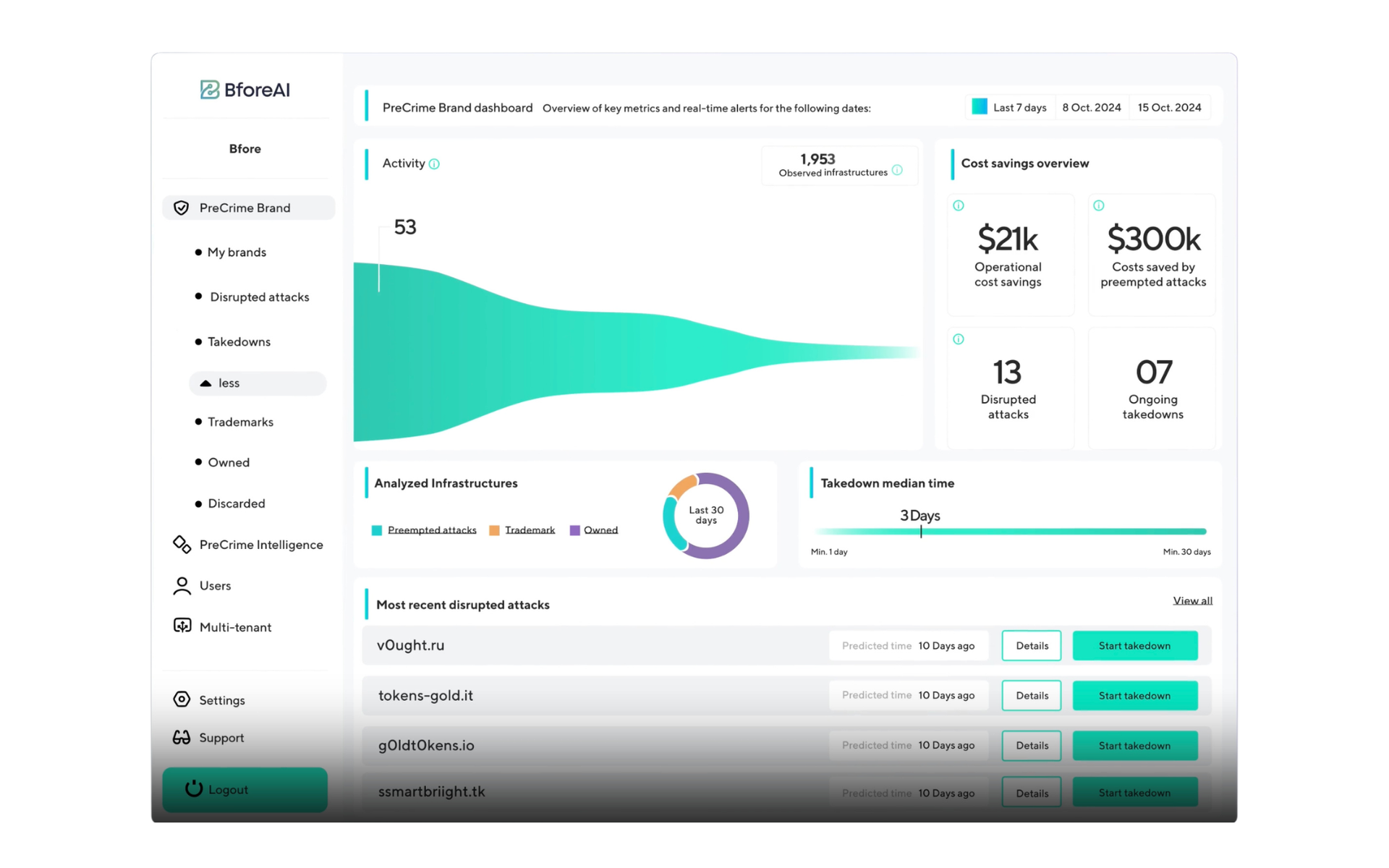
Analytics dashboard with teal area chart, key metrics cards, and a task list sidebar
September 18, 2026
Manual phishing and domain takedown investigations cost security teams hundreds of hours a year. See how BforeAI's PreCrime™ predictive cybersecurity platform, available in the UK exclusively through Cybergen, detects and automates takedown of weaponized and impersonated domains before they cost you time or money.