Why Cyber Threat Intelligence Should Drive Your Security Strategy in 2026
June 21, 2026

The Cyber Security Challenge Facing CISOs Today
Introduction
Chief Information Security Officers (CISOs) have never faced a more complex threat landscape. Organisations are under constant pressure to defend against increasingly sophisticated cyber attacks whilst simultaneously supporting business growth, digital transformation initiatives, regulatory compliance requirements and operational resilience programmes.
The reality is that most security teams are drowning in data but starving for intelligence. Security Operations Centres generate thousands of alerts every day. Vulnerability scanners identify tens of thousands of weaknesses across infrastructure, applications and cloud environments. Threat feeds provide endless streams of indicators, warnings and notifications. Yet despite having access to more security data than ever before, many organisations still struggle to answer a simple question: which threats actually matter?
The challenge is not a lack of information. The challenge is understanding which information requires action.
This is where Cyber Threat Intelligence (CTI) has become one of the most important capabilities available to modern security leaders. Rather than simply collecting security data, CTI provides context, relevance and prioritisation. It enables organisations to focus their limited resources on the threats that pose the greatest risk to the business.
As cyber threats continue to evolve at unprecedented speed, intelligence-led security has shifted from a competitive advantage to an operational necessity.
The Growing Problem of Alert Fatigue
Most security teams operate within an environment of perpetual overload. Every security tool generates alerts. Every vulnerability scan identifies new weaknesses. Every threat feed introduces additional indicators that require analysis.
The result is alert fatigue.
Security analysts are forced to investigate large volumes of events that ultimately present little or no genuine risk. Valuable time is spent triaging false positives, analysing low-priority vulnerabilities and investigating activity that does not warrant escalation.
This creates several significant challenges.
Firstly, genuine threats become harder to identify. When analysts are presented with thousands of alerts every day, critical indicators can easily be overlooked amongst the noise.
Secondly, security teams become less efficient. Skilled security professionals spend more time processing data than investigating meaningful risks.
Thirdly, organisations struggle to prioritise remediation efforts. Security leaders may know that thousands of vulnerabilities exist within their environment, but determining which vulnerabilities are actively being targeted by threat actors is considerably more difficult.
Finally, alert fatigue contributes directly to analyst burnout. Retaining experienced security personnel has become increasingly challenging, and excessive operational noise only exacerbates this issue.
Without effective prioritisation, organisations risk focusing on the wrong problems whilst genuine threats remain undetected.
Why Traditional Security Approaches Are No Longer Enough
Historically, cyber security programmes have focused heavily on prevention and detection. Organisations invested in firewalls, endpoint protection, intrusion detection systems and vulnerability management platforms with the expectation that more tools would lead to better security outcomes.
While these technologies remain essential, they are no longer sufficient on their own.
Modern attackers are highly adaptive. Threat actors continually modify their tactics, techniques and procedures to bypass traditional security controls. Ransomware groups operate as sophisticated businesses. Nation-state actors conduct long-term campaigns designed to evade detection. Cybercriminal organisations leverage automation and artificial intelligence to increase the scale and effectiveness of attacks.
At the same time, organisations continue to expand their attack surface through cloud adoption, remote working, third-party integrations, digital supply chains and emerging technologies.
The result is an environment where reactive security is no longer enough.
Organisations need the ability to understand who may target them, how attacks are likely to occur and which assets are most attractive to adversaries. They require intelligence rather than simply data.
Understanding Cyber Threat Intelligence
Effective Cyber Threat Intelligence combines multiple sources of information to build a comprehensive understanding of the threat landscape facing an organisation. Rather than relying on isolated indicators or generic threat feeds, modern CTI programmes bring together intelligence from numerous sources to create a clear picture of emerging risks, active adversaries, and potential attack paths. This includes analysing threat actor activity and behaviour to understand how cybercriminal groups, ransomware operators, hacktivists, and nation-state actors target organisations, as well as monitoring indicators of compromise (IOCs) such as malicious IP addresses, domains, file hashes, and command-and-control infrastructure.
A mature threat intelligence capability also incorporates dark web intelligence, providing visibility into stolen credentials, leaked data, underground marketplaces, and discussions relating to potential attacks. Open-source intelligence (OSINT) complements this by gathering publicly available information from security researchers, industry reports, government advisories, and threat-sharing communities. Technical threat analysis adds further depth by examining malware behaviour, attack techniques, vulnerabilities, and exploitation methods, while industry-specific threat reporting helps organisations understand the risks most relevant to their sector, whether financial services, healthcare, manufacturing, critical infrastructure, or professional services.
Cyber Threat Intelligence must also consider broader geopolitical developments that can influence cyber activity. International conflicts, regulatory changes, economic sanctions, and political tensions frequently impact threat actor motivations and targeting patterns. Vulnerability exploitation intelligence helps security teams understand which newly disclosed vulnerabilities are actively being weaponised in the wild, enabling more effective prioritisation of patching and remediation efforts. Attack campaign tracking provides visibility into ongoing malicious operations, helping organisations identify whether they may be at risk from known threat actor campaigns before an attack occurs.
The objective of effective threat intelligence is not to generate more alerts or create additional operational noise. Instead, it is to provide security teams and business leaders with the context required to make informed, risk-based decisions. For CISOs, this represents a fundamental shift from a reactive security posture to a proactive cyber security strategy. Rather than responding to incidents after they occur, organisations can anticipate threats, prioritise resources more effectively, strengthen resilience, and make smarter security investments based on real-world intelligence and business risk.
How Threat Intelligence Enables Better Risk Prioritisation
One of the most significant benefits of Cyber Threat Intelligence is its ability to improve risk prioritisation.
Most organisations face a substantial backlog of vulnerabilities, security issues and potential threats. Limited resources make it impossible to address everything simultaneously.
- Threat intelligence helps answer critical questions:
- Which vulnerabilities are actively being exploited?
- Which assets are most likely to be targeted?
- Which threat actors are relevant to our industry?
- Which attack techniques are currently being observed?
- Which risks present the greatest potential business impact?
By answering these questions, organisations can focus their efforts where they will have the greatest effect.
Instead of patching thousands of vulnerabilities based solely on severity scores, organisations can prioritise vulnerabilities that are actively being weaponised by attackers.
Instead of attempting to defend equally against every possible threat, organisations can focus on adversaries most likely to target their sector.
This intelligence-driven approach improves security outcomes whilst making more efficient use of resources.
Threat Intelligence and Vulnerability Management
Traditional vulnerability management often relies heavily on CVSS scores.
While severity ratings provide useful information, they do not always reflect real-world risk.
A critical vulnerability may exist within a system that is isolated from external access and unlikely to be exploited. Conversely, a medium-severity vulnerability may be actively targeted by multiple threat actors.
Cyber Threat Intelligence provides the missing context.
By incorporating exploitation data, threat actor activity and attack campaign intelligence, organisations can prioritise vulnerabilities based on actual risk rather than theoretical severity.
This allows security teams to:
• Reduce remediation backlogs.
• Focus on exploitable vulnerabilities.
• Improve patch management efficiency.
• Reduce organisational risk more effectively.
• Demonstrate measurable security improvements to stakeholders.
For CISOs seeking to maximise return on security investment, intelligence-led vulnerability management delivers significantly better outcomes than traditional approaches.
Strengthening Incident Response Through Threat Intelligence
Incident response is one of the areas where Cyber Threat Intelligence (CTI) delivers the most immediate and measurable value. When a security incident occurs, every minute matters. The speed at which an organisation can identify, contain, investigate and remediate a threat has a direct impact on operational disruption, financial loss, regulatory exposure and reputational damage. Security teams are often under immense pressure to make rapid decisions with incomplete information, making access to accurate and actionable intelligence a critical component of an effective incident response strategy.
Cyber Threat Intelligence enhances incident response by providing valuable context that goes far beyond the alerts generated by security tools. This includes known indicators of compromise (IOCs), detailed threat actor profiles, malware analysis, attack infrastructure intelligence, campaign tracking, and insights into attacker tactics, techniques and procedures (TTPs). Armed with this intelligence, security teams can quickly determine whether suspicious activity is linked to a known threat actor, active ransomware campaign or broader attack operation targeting their industry.
Rather than investigating incidents in isolation, analysts can use threat intelligence to understand the wider context surrounding an attack. This enables faster root cause analysis, more accurate threat attribution and a clearer understanding of potential attacker objectives. By reducing uncertainty and providing actionable insight, CTI significantly shortens investigation times, improves containment effectiveness and helps organisations recover more quickly. For CISOs, integrating threat intelligence into incident response processes strengthens organisational resilience and ensures security teams can respond decisively when faced with evolving cyber threats.
Mapping Threat Actor Behaviour
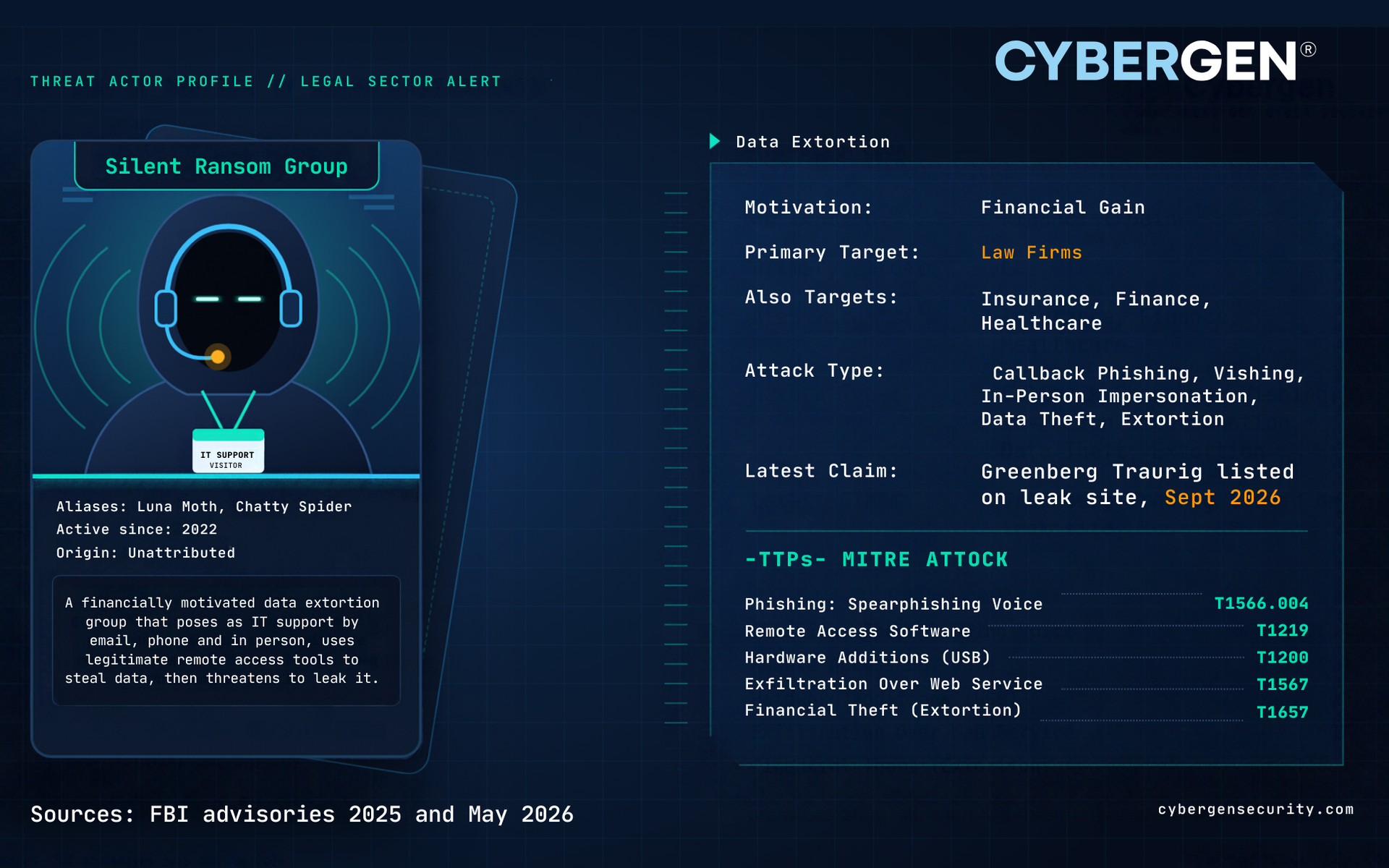
Understanding attacker behaviour is essential for building effective cyber security defences in today's rapidly evolving threat landscape. Cyber Threat Intelligence enables organisations to analyse and map adversary tactics, techniques and procedures (TTPs) against recognised frameworks such as the MITRE ATT&CK framework, providing valuable insight into how threat actors operate throughout the attack lifecycle. This intelligence allows security teams to move beyond reactive security measures and develop a deeper understanding of the methods being used by cybercriminals, ransomware groups and nation-state actors.
By understanding attacker behaviour, organisations can identify defensive gaps, improve detection capabilities, validate existing security controls and enhance threat hunting activities. Security teams can focus their efforts on the attack techniques most likely to be used against their organisation, ensuring resources are allocated more effectively. Rather than defending against generic threats, organisations can build threat-informed defence strategies specifically designed to detect, disrupt and contain relevant adversaries. This intelligence-led approach represents a significant evolution in cyber security maturity, enabling stronger resilience and more proactive risk management.
Improving Threat Hunting Capabilities
Threat hunting has become an increasingly important component of mature security programmes.
Rather than waiting for alerts, threat hunters proactively search for evidence of malicious activity within their environment.
However, effective threat hunting requires direction.
Cyber Threat Intelligence provides the hypotheses, indicators and behavioural patterns that enable targeted hunting activities.
By understanding current threat actor behaviour, security teams can focus hunting efforts on the most relevant attack techniques.
This improves detection effectiveness and increases the likelihood of identifying threats before they cause significant damage.
Making Smarter Security Investments
Security budgets are under constant scrutiny.
Boards and executive teams increasingly expect CISOs to demonstrate measurable value from security investments.
Threat intelligence supports this objective by helping organisations align security spending with actual risk.
Rather than investing based on vendor marketing or industry trends, intelligence enables organisations to make evidence-based decisions.
This includes:
• Prioritising technology investments.
• Optimising security operations.
• Identifying capability gaps.
• Reducing unnecessary expenditure.
• Improving overall security ROI.
For executive stakeholders, intelligence-led decision-making provides greater confidence that security investments are addressing genuine business risks.
Cyber Threat Intelligence and Executive Reporting
One of the most overlooked benefits of CTI is its ability to improve communication between security teams and business leaders.
Technical security data often lacks context for non-technical stakeholders.
Threat intelligence translates technical findings into business-relevant insights.
Rather than reporting the number of detected vulnerabilities, CISOs can explain which threats are most likely to affect the organisation and the potential business impact.
This supports more effective board-level discussions regarding risk, investment and resilience.
Why Threat Intelligence Is Essential in 2026
The importance of Cyber Threat Intelligence continues to grow as the cyber threat landscape becomes increasingly complex and unpredictable. Artificial intelligence is enabling attackers to automate reconnaissance, phishing campaigns and malware development at unprecedented scale, while ransomware groups continue to refine their tactics and target organisations more aggressively.
Supply chain attacks remain a significant concern, and nation-state actors are conducting increasingly sophisticated operations against both public and private sector organisations. As attack surfaces expand across cloud environments, remote workforces and interconnected systems, threats are evolving faster than traditional security approaches can adapt. Cyber Threat Intelligence provides the visibility, context and foresight organisations need to stay ahead of emerging risks, enabling CISOs to anticipate attacks, prioritise resources and make proactive security decisions.
Why Organisations Choose Cybergen for Threat Intelligence
At Cybergen, we believe that threat intelligence should do more than provide information. It should drive action.
Our approach focuses on delivering actionable intelligence that helps organisations reduce risk, improve operational efficiency and strengthen resilience.
We work with organisations to identify relevant threat actors, monitor emerging threats, prioritise vulnerabilities and enhance incident response capabilities.
Our intelligence services are designed to support strategic decision-making whilst providing practical operational value for security teams.
By combining technical expertise, threat research and real-world security experience, Cybergen delivers intelligence that empowers organisations to make smarter security decisions.
Whether supporting a Security Operations Centre, strengthening vulnerability management processes or enabling executive risk reporting, Cybergen helps organisations transform intelligence into measurable security outcomes.
Summary
The future of cyber security belongs to intelligence-driven organisations.
As threats become more sophisticated and attack surfaces continue to expand, security leaders require more than alerts, dashboards and vulnerability lists. They require context, prioritisation and actionable insight.
Cyber Threat Intelligence enables organisations to understand which threats matter most, where resources should be focused and how security investments can deliver maximum value.
For CISOs seeking to improve resilience, strengthen incident response, optimise security operations and align cyber security with business objectives, CTI has become an essential capability.
Cybergen helps organisations move beyond reactive security by delivering actionable threat intelligence that drives better decisions, faster responses and stronger security outcomes.
Speak to us today to discover how intelligence-led security can transform your cyber defence strategy.
Ready to strengthen your security posture? Contact us today for more information on protecting your business.
Let's get protecting your business
Thank you for contacting us.
We will get back to you as soon as possible.
By submitting this form, you acknowledge that the information you provide will be processed in accordance with our Privacy Policy.
Please try again later.
Cybergen News
Sign up to get industry insights, trends, and more in your inbox.
Contact Us
Thank you for subscribing. It's great to have you in our community.
Please try again later.
SHARE THIS
Latest Posts