The Future of Cybersecurity: Navigating the Evolving Threat Landscape in 2026 and Beyond


February 11, 2026

Introduction, The Turning Point for Security

As we step deeper into 2026, the cybersecurity landscape is undergoing a transformation defined by two concurrent realities:


  1. Technological evolution, from AI to quantum computing, is reshaping both offensive and defensive capabilities.
  2. Cyber threats are moving beyond classic malware and network exploits, becoming intelligent, autonomous, and embedded in everyday digital tooling and decision-making.


In this new era, cybersecurity isn’t merely about protecting systems; it’s about safeguarding trust, autonomy, and strategic decision-making across enterprises. The era of static perimeters and reactive controls is over; the future belongs to organisations that can anticipate, adapt, and innovate securely. 


At Cybergen, we believe that understanding the trends shaping 2026 isn’t optional; it’s foundational to organisational resilience, operational continuity, and long-term strategic advantage in an age where digital is business-critical.

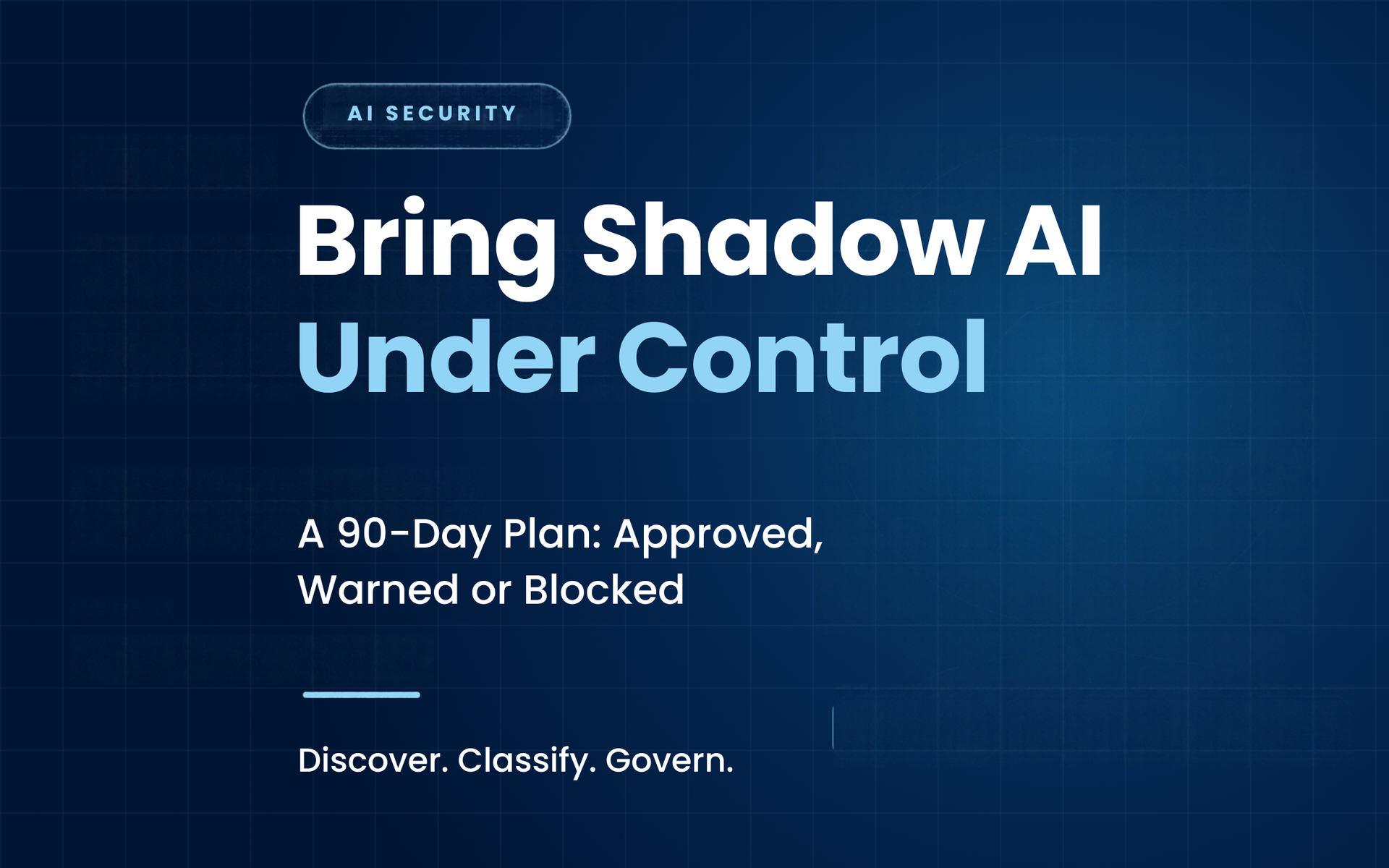
1. Shadow AI, The Invisible Frontier of Risk

What is Shadow AI?


“Shadow AI” refers to the unauthorised or unmanaged use of AI tools within an organisation — similar in concept to Shadow IT but magnified through AI’s scale and autonomy. Employees, teams, or even entire departments may be adopting AI services for efficiency, creativity, or automation outside sanctioned governance frameworks. This creates blind spots that traditional cybersecurity teams cannot detect or control. 


Why It Matters Now

Unlike classic Shadow IT (e.g., rogue cloud storage or unapproved SaaS), Shadow AI:


• Processes sensitive data in opaque ways.

• Generates predictive intelligence about internal systems or market insights without oversight.

• Increases attack surfaces by exposing data and workflows outside traceable governance.


According to industry analysis, organisations with unmanaged AI usage experienced significantly higher costs from data breaches, in some cases exceeding hundreds of thousands of dollars in additional incident costs. 


The Cybergen Perspective

To manage Shadow AI risk, organisations must evolve their security paradigms:


• AI governance frameworks that align with risk tolerance and business objectives.

• Data classification and monitoring systems to map where and how AI is used.

• Integration of AI usage policies into identity and access management systems.


Cybersecurity teams must now think in terms of who is using intelligence, and how that intelligence interacts with sensitive systems and data. The future of security governance lies in visibility, accountability, and controlled adoption of AI technologies.

2. Deepfakes, Social Engineering, and the Crisis of Trust

From Novelty to Weaponised Deception


Deepfake technology, powered by generative AI, has evolved far beyond entertainment. Recent insight indicates more than a 1,500% growth in deepfake creation over a short period, underscoring how quickly this technology has been weaponised. 


Today, attackers use deepfakes for:


• Executive impersonation on video or audio calls.

• Convincing voice-based social engineering to bypass controls.

• Synthetic identities to trick employees into sharing credentials or approving fraudulent transactions.


The danger of deepfakes doesn’t lie primarily in technical exploits; it lies in eroding human trust, which has traditionally been a pillar of security.


Why Traditional Defences Fall Short

Deepfakes target the human element, and humans are usually the weakest link in any defence strategy:


• Passwords and biometrics can be mimicked or spoofed.

• Human intuition is slow to adapt to convincingly realistic synthetic media.

• Email and telephony authentication alone may not detect malicious AI-generated content.


This shift means that cyber defenders must rethink the trust models underpinning authentication and identity.


Strategic Cybergen Response


Cybergen advocates for:


• Multi-factor, phishing-resistant authentication methods, such as passkeys, cryptographic identity tokens, and zero-trust identity verification.

• Behavioural analysis and anomaly detection to flag inconsistencies even when identities appear legitimate.

• Human-in-the-loop systems to keep critical decisions anchored in verified human intent.

In a future where seeing and hearing no longer equal trusting, organisations must integrate identity resilience into every access and communication layer.

3. Artificial Intelligence, The Dual-Use Revolution

AI is simultaneously the most transformative tool in cybersecurity and one of its greatest existential challenges.


AI as a Defender


On the defensive side, AI offers major advancements:


• Real-time anomaly and threat detection.

• Automated response orchestration and remediation.

• Predictive threat intelligence based on global patterns and historical data.


These capabilities help organisations reduce mean time to detect and mean time to respond, two critical metrics in modern security operations.


AI as an Offensive Force


However, AI also amplifies adversary capabilities in profound ways:


• AI-generated exploits and malware can be highly adaptive, evading signatures and traditional detection. 

• AI agents can automate entire attack lifecycles, enabling highly personalised social engineering at scale.

• Prompt injection vulnerabilities, where malicious prompts manipulate AI behaviour, remain persistent, ranking among top AI security weaknesses year after year. 


This dual-use characteristic makes AI both a strategic asset and a potent threat multiplier.


Cybergen’s AI-Driven Security Philosophy


Cybergen’s approach to AI in cybersecurity centres on guided integration rather than unfettered adoption. The core principles include:


• AI governance that aligns with risk appetite and compliance requirements.

• Defensive AI models augmented with human validation checkpoints.

• Continuous learning systems that evolve to detect new threat vectors.


AI isn’t merely a tool, it’s a partnership in security. But like all partnerships, its value depends on how well its risks are managed and understood.

4. The Quantum Imperative, A Cryptographic Awakening

Quantum Computing: Threat and Opportunity


Quantum technology represents the most disruptive force entering the cybersecurity domain.


Its implications are profound:


• Cryptography currently securing global data ecosystems (e.g., RSA, ECC) could be rendered obsolete once quantum computers reach sufficient scale.

• Attackers can practice “store now, decrypt later” strategies, capturing encrypted data today with the intention of decrypting it once quantum computation becomes viable. 


This doesn’t belong to a distant future; it is a strategic risk affecting long-term data confidentiality today.


The Shift to Post-Quantum Cryptography (PQC)

Post-quantum cryptography refers to cryptographic algorithms that remain secure even in the presence of powerful quantum computations. The transition to PQC requires:


• Inventory of cryptographic assets.

• Migration planning and staged roll-out of quantum-resistant algorithms.

• Vendor and ecosystem coordination, since cryptographic standards must be supported across services and platforms.


Cybergen’s Strategic Quantum Readiness

At Cybergen, we emphasise crypto agility, the ability of systems to rapidly adopt new cryptographic protocols without service disruption.


Key components include:


• Quantum-ready key management and encryption frameworks.

• Early adoption of standards from bodies like NIST and global cybersecurity alliances.

• Continuous assessment of data lifecycles to prioritise migration, especially for data that must remain secure for decades.


Quantum computing isn’t merely a technological leap; it’s a paradigm shift that recasts the fundamentals of secure communication and data protection.

5. AI Agents, Attacks On and By Autonomous Actors

Rise of AI Agents


AI agents are autonomous software entities capable of performing complex tasks with minimal human direction. These are no longer hypothetical — they are active in many enterprise environments.


However, their autonomous nature introduces two major threat vectors:

Attacks By AI Agents


• Autonomous generation of phishing campaigns tailored to individual behavioural profiles.

• Automated malware creation that adapts to detection mechanisms.

• AI orchestration of attack campaigns across multiple vectors simultaneously.


These threats are not just scales of speed; they are fundamentally different in how they execute and evolve.


Attacks On AI Agents

• Compromised AI agents with excessive privileges can wreak havoc before human teams intervene.

• Prompt injection and contextual manipulation can cause an AI agent to act against organisational policies or integrity.


In an environment where machine entities vastly outnumber human ones, identity and access control must evolve beyond current paradigms.

Defensive Strategies for Autonomous Threats


Cybergen advocates:

• Strict least-privilege policies for all machine identities.

• Continuous behavioural baselining for both human and non-human actors.

• AI governance structures that classify, monitor, and enforce agent behaviours.


The future battlefield isn’t just human vs attacker. It’s autonomous systems vs autonomous threats, and defenders must be able to manage both with precision.

6. Cybersecurity as Strategic Decision Science

Beyond Tools: Cybersecurity as a Management Discipline


The trends shaping 2026, from Shadow AI to quantum cryptography, have one unifying theme: cybersecurity now intersects with strategic business decision-making.


No longer is security about simply deploying tools or preventing breaches. The future requires:

• Policy and governance frameworks that balance risk and innovation.

• Executive leadership involvement in risk prioritisation and AI adoption.

• Security metrics that influence business roadmaps and product strategies.


Cybersecurity must be woven into organisational decision frameworks at the highest levels.


Cybergen’s Holistic Security Model


Cybergen’s vision of the future integrates:


• Threat intelligence as a service (TI-aS), delivering actionable insights that inform decisions.

• Risk-aligned security architectures, where defences are tailored to organisational priorities and risk tolerances.

• Continuous learning loops, where detected threats refine future policies and controls.

This approach embeds cybersecurity into the strategic fabric of enterprise operations.

7. Preparing for the Next Decade, A Roadmap

To thrive in the evolving cybersecurity landscape, organisations should prioritise several foundational steps:


1. Establish AI Governance

Define where and how AI can be used, how data is classified for AI processing, and how AI outputs are audited.


2. Adopt Identity-Centric Security

Move beyond passwords and static authentication toward phishing-resistant structures like passkeys, cryptographic identity attestations, and zero trust.


3. Build Crypto Agility

Develop frameworks capable of adopting post-quantum cryptography as standards evolve.


4. Monitor Machine Identity Behaviours

Apply behavioural analytics to all identities, human and machine, to detect anomalies.


5. Foster Security-First Culture

Train teams not just on technologies but on threat recognition and risk stewardship.


6. Invest in Threat Intelligence

Use advanced, proactive threat intelligence, including adversary tracking, campaign analysis, and predictive signals, to inform proactive defence strategies.

Summary, Securing the Future Together

The future of cybersecurity is not a linear extension of the past; it is a transformation driven by intelligence, autonomy, and strategic risk management.


As we navigate the trends defining 2026 and beyond, from Shadow AI to the quantum frontier, the role of cybersecurity must evolve from technical control to strategic enabler.


Cybergen’s mission is to guide organisations through this transformation with clarity, confidence, and actionable insight. By combining threat intelligence, AI-driven security, and strategic governance, we can build cyber-resilience that not only protects but propels organisations into the future with certainty.

Ready to strengthen your security posture? Contact us today for more information on protecting your business.


Let's get protecting your business

Disaster Recovery

Keep your data secure and protected at all times.


Cybergen News

Sign up to get industry insights, trends, and more in your inbox.

Contact Us

SHARE THIS

Latest Posts

Blue shield with a padlock icon in a digital background with binary code, representing cybersecurity.
February 23, 2026
Why compliance-driven security fails in 2026. Learn how attackers exploit identity and attack paths, and how intelligence-led penetration testing reduces real cyber risk
Woman presenting AI concept on screen, pointing with a laptop. Blue tones, glowing
February 21, 2026
How AI is transforming cyber attacks in 2026, from deepfake phishing to adaptive malware — and what CISOs must do now to reduce risk and strengthen resilience.
Laptop with a fingerprint scan graphic overlaid, symbolizing secure access.
February 17, 2026
Why traditional penetration testing fails in 2026, and what effective, risk-driven testing really looks like. Discover how to move beyond CVSS scores and vulnerability lists to attacker-focused attack paths, identity compromise, lateral movement, and measurable risk reduction that actually improves security outcomes.
Man looking at a digital interface with holographic building model, graphs, and code overlays, indoors.
February 11, 2026
Cyber threat intelligence reveals how modern ransomware attacks really start: credential abuse, trusted access, and quiet pre-positioning long before impact.
Red and blue digital graphic with the word
February 5, 2026
CREST pen testing reveals what really happens after initial compromise. Learn how attackers escalate privileges, move laterally, and how testing exposes real risk.
Notepad++ code editor window with C++ code and Notepad++ logo with a gecko.
February 3, 2026
Notepad++ update infrastructure was hijacked in a targeted supply-chain attack. Learn what happened, who was behind it, and why it matters.
Hand holding magnifying glass over digital warning sign on screen.
February 1, 2026
High-severity vulnerabilities don’t equal real cyber risk. Learn why CVSS-driven risk registers fail, how attackers exploit exposure, and how CTEM reduces real-world risk.
Hand touching a glowing security shield interface with a binary code background.
February 1, 2026
Breaches persist despite audits and investment. Learn how threat-led security turns cyber activity into prioritised risk reduction with threat intelligence, MDR and CTEM.
Silhouette of person holding laptop, surrounded by multiple glowing computer screens displaying code. Blue tones.
January 24, 2026
Most cyber attacks begin quietly with recon and stolen credentials, long before your tools alert. Learn what security teams miss and how to detect intrusions earlier with threat intel, MDR and hunting.
Isometric illustration of cyber security threats, including hackers, a computer breach, and financial data theft.
By Aaron Bennett January 21, 2026
Stop trusting scan results alone. Discover what penetration testing reveals that scanners miss: real exploit paths, identity gaps, lateral movement, and impact.