Pentesting the AI: Stress-Testing Autonomous Threat Response in a Simulated Breach

May 7, 2025

The Evolving Role of Penetration Testing in AI-Driven Cybersecurity

Cyber threats have become more sophisticated, leveraging automation, polymorphism, and stealth tactics to evade legacy systems. As enterprises adopt advanced, AI-driven solutions, it becomes critical to test not just for vulnerabilities but for the effectiveness of automated detection and response mechanisms. 


This blog explores a unique approach to CREST-certified penetration testing by simulating a sophisticated cyber attack to evaluate a next-generation AI-based security platform's real-time threat detection, behavioural analysis, and autonomous incident response capabilities.

A Brief History of Penetration Testing

Penetration testing, or "pen testing", has developed from a niche technical exercise into a cornerstone of modern cyber security. Its evolution reflects the broader trajectory of information assurance—shifting from basic system checks in early computing to today’s sophisticated simulations involving cloud infrastructure, artificial intelligence (AI), and nation-state-level attack strategies.


Origins in Military and Government


The origins of penetration testing date back to the 1960s and 1970s, when government bodies such as the US Department of Defense began evaluating the resilience of early computer systems. One of the first formalised approaches was through so-called Tiger Teams—groups of authorised professionals tasked with attempting to breach classified systems to identify weaknesses. These early exercises were manual, labour-intensive, and designed to mimic how a real adversary might exploit vulnerabilities.


In 1971, the Willis Ware Report, commissioned by the US Air Force, highlighted significant risks inherent in computing environments and reinforced the need for proactive testing and security validation. These early initiatives laid the foundation for ethical offensive security as a structured discipline.

During the 1980s and 1990s, as the internet expanded and corporate networks became more commonplace, penetration testing gained traction in the private sector. The concept of ethical hacking first popularised in the 1990s became central to internal and third-party assessments. Security professionals began to adopt the same tactics and tools used by malicious actors but within a controlled, sanctioned context.


Organisations increasingly engaged security experts to assess their network perimeter, firewalls, and endpoint protections. Tools such as SATAN (Security Administrator Tool for Analysing Networks) and Nmap emerged, enabling testers to conduct network discovery and identify misconfigurations or exposed services.

Standardisation and the Emergence of CREST

As the demand for pen testing services grew, the industry recognised the need for formal standards and professional ethics. By the early 2000s, frameworks such as OWASP (Open Web Application Security Project) and OSSTMM (Open Source Security Testing Methodology Manual) began to shape consistent methodologies for security testing.


In response to the need for professional oversight, CREST (Council of Registered Ethical Security Testers) was founded in 2006 in the United Kingdom. CREST introduced rigorous accreditations for individual penetration testers and testing firms, ensuring that clients received high-quality, ethically sound, and repeatable testing services. It quickly became a benchmark in sectors such as finance, healthcare, and critical national infrastructure.

Modern Pen Testing: Adaptive and Strategic

Today, penetration testing is far more than a checklist-driven vulnerability scan. It encompasses full-spectrum engagements such as red teaming, purple teaming, social engineering assessments, and cloud configuration reviews. Testers must now contend with encrypted communications, DevOps pipelines, containerised applications, and AI-powered defences.


The shift towards automated, intelligent security systems has further changed the nature of pen testing. The objective is no longer solely to "break in", but to assess how effectively a security platform detects, correlates, and responds to simulated real-world threats.


In this context, penetration testing has become a vital tool for validating cyber resilience—not just uncovering flaws, but proving the efficacy of defensive strategies in live, adversary-like scenarios.

Why CREST Penetration Testing Still Matters in an AI Era

CREST (Council of Registered Ethical Security Testers) sets the gold standard for penetration testing. Their rigorous methodologies ensure thorough, ethical, and repeatable testing practices that simulate real-world threats. While modern platforms boast next-gen capabilities like AI-driven defence and zero-trust architecture, it's crucial to validate these features under pressure using CREST-aligned testing practices. Our mission: put an anonymous autonomous security engine to the test against a simulated multi-vector breach.

Test Objective: Simulating Real-World Threats to Validate AI Defence

The primary goal of this CREST-aligned penetration test was not merely to identify security gaps but to simulate a comprehensive, real-world cyberattack that would pressure-test a modern AI-driven defence platform. Our focus extended beyond static vulnerability assessment into dynamic threat response validation—measuring how the system behaves under active attack conditions. The intent was to emulate the tactics of advanced persistent threats (APTs), insider actors, and credential-based intrusions to assess how the platform's artificial intelligence and automation capabilities perform across the entire cyber kill chain.

The test was methodically designed to evaluate six critical components:


AI-Driven Endpoint Protection

Traditional endpoint detection relies heavily on signature-based methods, which are often blind to novel threats. Our test introduced polymorphic malware, in-memory exploits, and fileless attacks to determine whether the platform could recognise and stop malicious activity purely through behavioural analysis and machine learning. Emphasis was placed on how quickly endpoints were flagged, isolated, and remediated and whether the system could differentiate between benign anomalies and real threats.


Behavioural Threat Detection

We sought to validate whether the platform could create dynamic behavioural baselines for users, applications, and devices. By gradually escalating anomalies such as abnormal login times, unusual file access patterns, and uncharacteristic data transfers we measured the AI’s ability to correlate low-and-slow indicators of compromise. This approach mimicked the stealthy footprint of insider threats and allowed us to test the sensitivity and accuracy of anomaly detection engines.


Automated Response and Orchestration

Detection without timely response is a partial victory at best. We simulated coordinated attacks across endpoints and identity layers to observe how the platform autonomously orchestrated containment efforts. This included whether it initiated endpoint quarantines, forced password resets, blocked outbound connections, and notified the security team in real-time. We evaluated the orchestration logic to determine if it aligned with best practices in incident containment, and whether it scaled intelligently based on threat severity and scope.


Insider Threat Detection

Some of the most damaging breaches originate from within. Using simulated insider behaviours such as privilege abuse, unauthorised data access, and lateral movement using internal credentials we tested the platform's capacity to detect policy violations that do not trigger traditional security controls. We also examined whether behavioural deviations over time could trigger alerts, even when no malware or external C2 communication was present.


Identity Protection Mechanisms

As identity becomes the new perimeter, we introduced credential-focused attacks to evaluate resilience. Tests included brute-force authentication attempts, token reuse, session hijacking, and privilege escalation using stolen credentials. We analysed whether the platform enforced adaptive authentication measures such as MFA triggers, session terminations, and step-up authentication based on risk scoring and behavioural context.


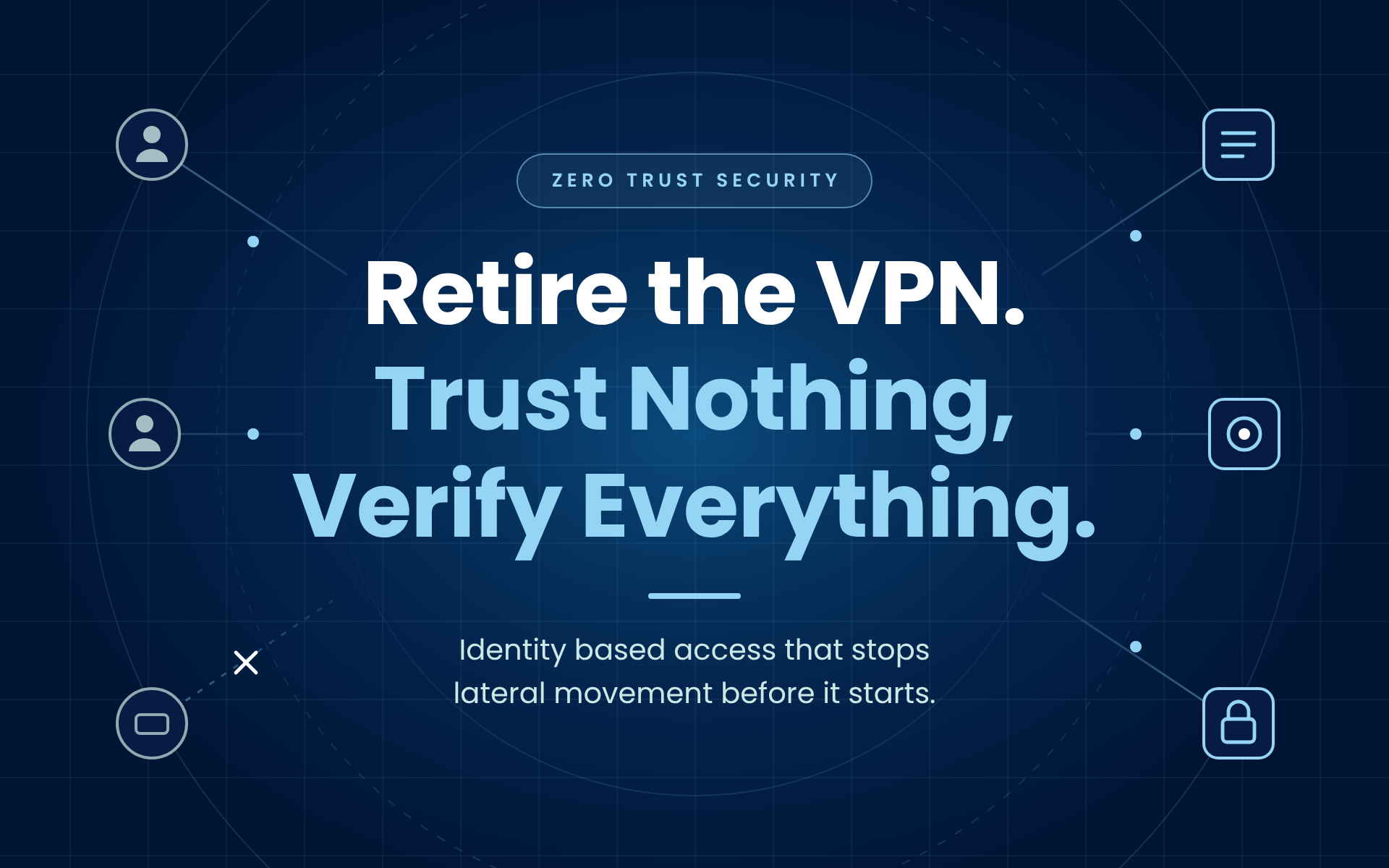
Zero Trust Enforcement

To verify the operational reality of a Zero Trust architecture, we assessed whether the platform enforced least-privilege access continuously not just at login. The penetration test included scenarios like unauthorised application access, rogue device connection attempts, and cross-segment lateral movement. We evaluated whether dynamic access policies adjusted based on context device health, user behaviour, and network conditions and whether segmentation controls effectively minimised blast radius.

By simulating real-world threat scenarios and adversary tradecraft, we were able to measure how deeply integrated and intelligent the platform’s defence mechanisms truly were. Could it link disparate signals to see the bigger picture? Could it act without human guidance to contain and neutralise threats? This penetration test designed with CREST principles aimed to answer those questions in a practical, measurable, and results-oriented manner.

Test Environment Overview

To keep the test realistic, we created a segmented enterprise environment that mirrored the complexity of a modern hybrid workplace.


The environment included:

  • 50 Windows and Linux endpoints across different departments and user roles
  • A hybrid cloud infrastructure combining Microsoft Azure with on-prem servers
  • Simulated employee activity such as file sharing, authentication events, and collaboration tool usage
  • An Active Directory domain with staged user accounts across HR, Finance, Engineering, and IT
  • AI-based security platform components installed for endpoint protection, identity access control, and security orchestration

We ensured the system under test was configured to reflect real-world customer environments, including active behavioural AI, threat correlation engines, and automated incident response rules.

Execution: Simulating the Breach Lifecycle

Using a red team approach, our penetration testing team executed a multi-stage attack mimicking the lifecycle of a real-world threat actor.


The stages included:


1. Initial Access


We used spear-phishing emails with malicious attachments and drive-by downloads to simulate initial access vectors. Social engineering payloads were crafted to bypass email security filters and rely on macro-enabled Office documents.


2. Establishing Foothold


After successful payload execution, we established persistent C2 channels using encrypted communications over non-standard ports. This phase tested whether the platform could detect and respond to unusual outbound traffic and process injection behaviour.


3. Privilege Escalation & Lateral Movement


Post-exploitation tools like Mimikatz and BloodHound were used to escalate privileges and map lateral movement paths. Credential dumping, token impersonation, and pass-the-hash techniques were employed to access sensitive systems.


4. Data Access & Exfiltration

Sensitive files (simulated financial and HR data) were accessed and exfiltrated via HTTPS and DNS tunnelling. We analysed whether the platform detected and blocked data leaving the network or alerted on anomalous data transfer volumes and destinations.


5. Insider Simulation

Finally, we simulated an insider threat by assigning malicious behaviour to a compromised internal user. This included unauthorised file access during off-hours and attempts to disable security controls challenging the platform’s behavioural analytics.

Key Findings & Results

The penetration test yielded significant insights into how the platform performed across several key areas:


  • The AI-driven detection caught fileless malware in under 10 seconds and behavioural anomalies within 3–5 minutes of initial deviation.
  • Orchestration capabilities were robust, with automatic endpoint isolation, MFA re-authentication, and policy enforcement executed within acceptable timeframes.
  • Insider threat detection proved nuanced, with a low false positive rate but high sensitivity to sustained suspicious behaviour patterns.
  • Identity protection flagged unusual login geolocation and device mismatch scenarios, with adaptive authentication policies kicking inappropriately.
  • Zero trust enforcement was actively in play, preventing lateral movement beyond allowed access zones, even when valid credentials were used.

Ready to Find Your Security Gaps Before Hackers Do?


Don't wait for a breach to discover your vulnerabilities. Our expert-led penetration testing services simulate real-world attacks to help you stay one step ahead.


Contact us today for a free consultation and take the first step toward securing your systems.

Blue shield with a padlock icon in a digital background with binary code, representing cybersecurity.
February 23, 2026
Why compliance-driven security fails in 2026. Learn how attackers exploit identity and attack paths, and how intelligence-led penetration testing reduces real cyber risk
Woman presenting AI concept on screen, pointing with a laptop. Blue tones, glowing
February 21, 2026
How AI is transforming cyber attacks in 2026, from deepfake phishing to adaptive malware — and what CISOs must do now to reduce risk and strengthen resilience.
Laptop with a fingerprint scan graphic overlaid, symbolizing secure access.
February 17, 2026
Why traditional penetration testing fails in 2026, and what effective, risk-driven testing really looks like. Discover how to move beyond CVSS scores and vulnerability lists to attacker-focused attack paths, identity compromise, lateral movement, and measurable risk reduction that actually improves security outcomes.
Person wearing VR headset, text
February 11, 2026
Explore the future of cybersecurity in 2026. Discover emerging threats, evolving attack methods, and how organisations can stay resilient in a changing threat landscape.
Man looking at a digital interface with holographic building model, graphs, and code overlays, indoors.
February 11, 2026
Cyber threat intelligence reveals how modern ransomware attacks really start: credential abuse, trusted access, and quiet pre-positioning long before impact.
Red and blue digital graphic with the word
February 5, 2026
CREST pen testing reveals what really happens after initial compromise. Learn how attackers escalate privileges, move laterally, and how testing exposes real risk.
Notepad++ code editor window with C++ code and Notepad++ logo with a gecko.
February 3, 2026
Notepad++ update infrastructure was hijacked in a targeted supply-chain attack. Learn what happened, who was behind it, and why it matters.
Hand holding magnifying glass over digital warning sign on screen.
February 1, 2026
High-severity vulnerabilities don’t equal real cyber risk. Learn why CVSS-driven risk registers fail, how attackers exploit exposure, and how CTEM reduces real-world risk.
Hand touching a glowing security shield interface with a binary code background.
February 1, 2026
Breaches persist despite audits and investment. Learn how threat-led security turns cyber activity into prioritised risk reduction with threat intelligence, MDR and CTEM.