Shadow AI: The Fastest-Growing Cybersecurity Threat Most Organisations Cannot See
March 14, 2026

Introduction
Artificial intelligence is rapidly transforming how organisations operate. From automating administrative work to assisting software development and analysing complex datasets, generative AI tools are now embedded in the daily workflows of millions of employees across industries. For many organisations, this transformation has occurred faster than any previous technological shift. However, while AI is accelerating productivity and innovation, it is simultaneously creating a new and largely invisible cyber risk that many organisations are only beginning to understand.
This risk is known as Shadow AI.
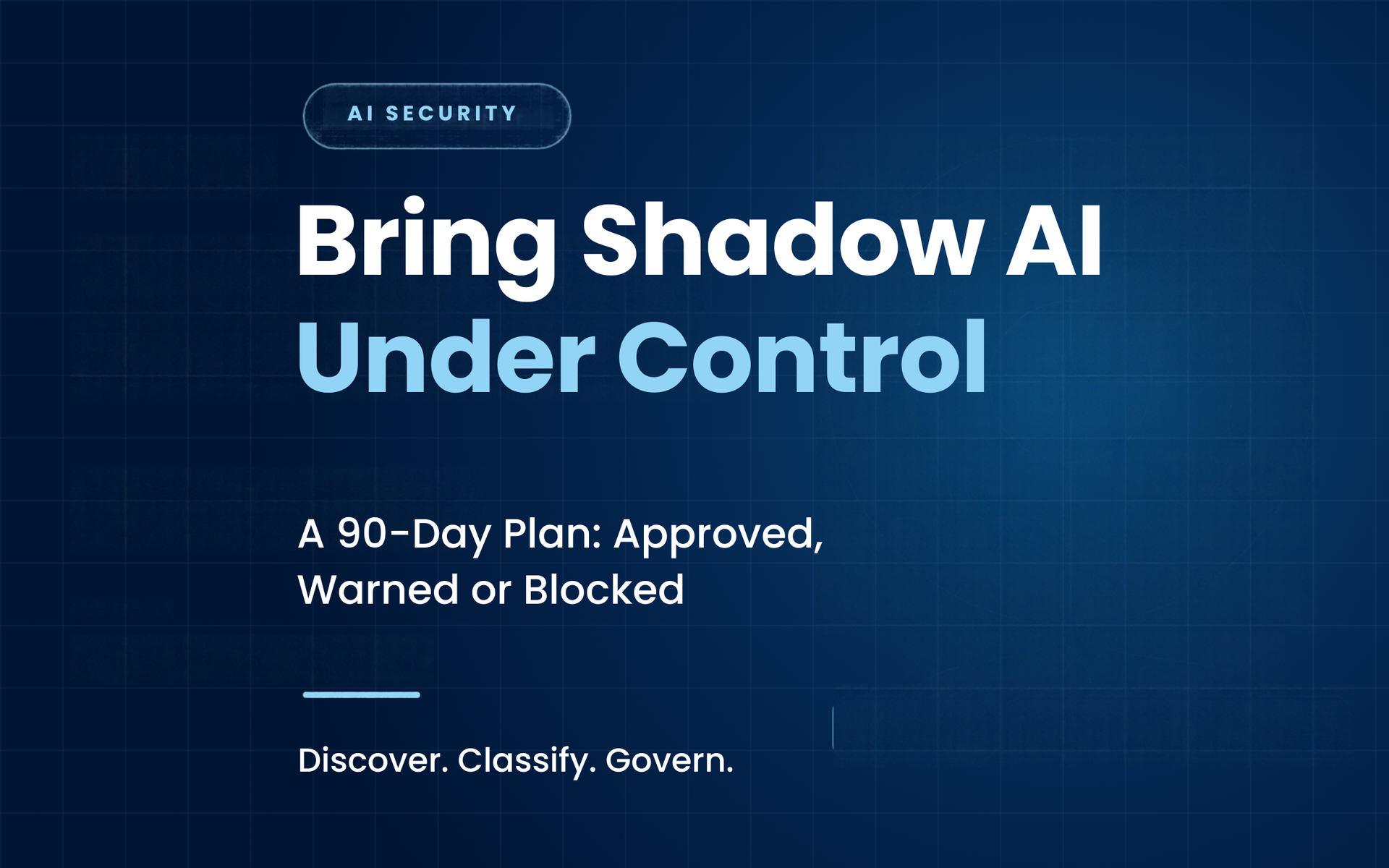
Shadow AI refers to the use of artificial intelligence tools, platforms or services by employees without the knowledge, governance or security oversight of their organisation’s IT and cybersecurity teams. In practice, this often means staff using tools such as ChatGPT, Claude, Gemini or other generative AI systems to process sensitive information, analyse company data or assist in work tasks without any formal approval or security controls.
The result is a rapidly expanding attack surface that many organisations cannot currently see, measure or manage.
While Shadow IT has been a concern for more than a decade, Shadow AI represents a far more complex and dangerous evolution of the problem. Traditional shadow systems might involve an unauthorised software tool or cloud application, but AI systems actively ingest, process and learn from data. When employees upload company documents, customer information or proprietary intellectual property into AI platforms, that information may be stored, processed or exposed in ways that are beyond the organisation’s control.
For security leaders, the implications are profound. Sensitive corporate information may now be leaving organisations not through malicious exfiltration but through everyday productivity workflows. Employees who believe they are simply working more efficiently may unknowingly be creating significant data exposure risks.
As artificial intelligence becomes embedded in the modern workplace, Shadow AI is rapidly emerging as one of the most significant cybersecurity challenges facing organisations today.
Understanding the Rise of Shadow AI
The rapid emergence of Shadow AI is not the result of malicious intent. In most cases, it is driven by the same forces that have historically fuelled technological innovation in the workplace: productivity, curiosity and convenience.
Generative AI tools have become remarkably accessible. Many employees can access powerful AI platforms within seconds through a web browser, often without needing to install any software. These tools can summarise reports, draft emails, analyse spreadsheets, write software code and translate documents in ways that save hours of manual work. For professionals under pressure to deliver faster results, the temptation to use AI tools is difficult to resist.
Consider a marketing professional tasked with producing a detailed campaign report. Instead of spending hours analysing large datasets manually, they might upload the spreadsheet into an AI tool and request an analysis of trends, customer behaviour or performance insights. From their perspective, this represents an efficient and intelligent use of technology. However, if the dataset contains sensitive customer information, internal sales figures or confidential business strategies, that data may now have been transferred outside the organisation’s security perimeter.
Similarly, a software developer may paste proprietary code into an AI coding assistant to troubleshoot a problem or generate improvements. While the AI system might produce helpful suggestions, the act of uploading that code could expose valuable intellectual property to external systems.
These behaviours are becoming increasingly common across organisations. The accessibility and convenience of AI tools mean employees often adopt them before formal governance policies are implemented. In many workplaces, AI adoption has been entirely employee-driven rather than centrally managed.
This dynamic creates an environment where organisations may have hundreds or even thousands of AI interactions taking place every day without any visibility into how corporate data is being used.
Why Traditional Security Models Struggle with AI
One of the most significant challenges posed by Shadow AI is that it does not resemble traditional cyber threats. Historically, cybersecurity strategies have been designed to protect networks, endpoints and cloud infrastructure from external attackers. Firewalls, intrusion detection systems and endpoint security tools were built to identify malicious behaviour, block unauthorised access and prevent data exfiltration.
Shadow AI bypasses many of these controls because the behaviour involved often appears entirely legitimate.
When an employee accesses an AI tool through a web browser, they may be interacting with a reputable platform hosted by a well-known technology provider. From a network perspective, the activity may appear no different from accessing a normal productivity website. Security tools designed to detect malware or suspicious connections may not recognise any threat.
The real risk lies in the data being shared during these interactions.
If an employee uploads confidential information into an AI system, the organisation may have no visibility into how that information is processed, stored or reused. Some AI platforms retain prompts and training data to improve their models, while others may integrate with external services or third-party plugins. Without governance and monitoring, organisations cannot guarantee how sensitive information might be handled.
This represents a fundamental shift in cybersecurity risk. The threat is no longer limited to attackers attempting to break into systems. Instead, valuable data may be leaving organisations through legitimate user actions that appear harmless.
In effect, employees can unintentionally become conduits for data exposure.
The Data Leakage Problem
One of the most immediate risks associated with Shadow AI is the potential for sensitive data leakage.
Modern organisations manage enormous volumes of valuable information. Financial records, customer data, legal agreements, intellectual property and strategic planning documents are routinely stored and shared within internal systems. When employees interact with AI tools, there is a growing possibility that this information may be copied, pasted or uploaded into external platforms.
The consequences of this exposure can be significant.
Imagine a financial services company where an analyst uploads confidential earnings projections into an AI system to generate a summary for a presentation. While the AI tool may produce a helpful summary, the underlying data may now be stored within external infrastructure. If the platform logs user prompts or retains information for model improvement, sensitive financial data could be stored indefinitely outside the organisation’s control.
In another example, a legal professional might upload sections of a confidential contract into an AI system to clarify complex language. Although the intention is to improve understanding, the act of sharing that document could expose privileged legal information.
Healthcare organisations face similar risks when patient data is inadvertently uploaded into AI tools during administrative tasks or data analysis. Even anonymised information can sometimes be re-identified when combined with other datasets, creating compliance risks under regulations such as GDPR.
The challenge for organisations is that these behaviours are rarely malicious. Employees often believe they are simply using modern tools to perform their jobs more effectively. Without clear guidance or oversight, however, even well-intentioned actions can result in significant data exposure.
The Intellectual Property Risk
Beyond immediate data leakage concerns, Shadow AI also introduces significant risks related to intellectual property.
For many organisations, proprietary knowledge represents their most valuable asset. Software companies rely on unique codebases, manufacturing firms depend on specialised processes and design firms protect creative assets that differentiate them in the marketplace. When this information is shared with external AI systems, organisations may inadvertently weaken their control over proprietary material.
The risk becomes particularly acute in technology and software development environments.
Developers frequently use AI coding assistants to accelerate programming tasks. These tools can generate functions, identify bugs and suggest optimisations. However, when developers paste sections of proprietary code into AI systems for troubleshooting or enhancement, that code may be processed by external models.
Depending on the platform’s data handling policies, elements of the code could potentially influence future model outputs.
This raises complex questions about ownership and intellectual property protection. If an AI system trained on proprietary code subsequently generates similar functionality for another user, the organisation that originally shared the code may have effectively contributed to the development of competing solutions.
Companies operating in research-driven sectors such as pharmaceuticals, defence and advanced engineering face particularly high stakes. Proprietary research data shared with external AI tools could undermine years of investment and innovation.
The Compliance and Regulatory Challenge
Regulatory compliance is another area where Shadow AI introduces significant challenges for organisations.
Across industries, organisations are subject to stringent requirements governing how data must be handled, stored and protected. Regulations such as the General Data Protection Regulation (GDPR) in Europe place strict obligations on organisations regarding the processing of personal data. Financial institutions must comply with sector-specific rules governing customer confidentiality and data security. Healthcare providers must ensure patient data is handled according to strict privacy standards.
When employees share information with external AI tools, organisations may inadvertently breach these regulatory obligations.
Consider a scenario in which an employee uploads customer support transcripts into an AI platform to analyse sentiment or identify service improvements. If those transcripts contain personal data such as names, account numbers or contact details, the organisation may have effectively transferred personal data to an external processor without appropriate safeguards or contractual agreements.
From a compliance perspective, this could constitute a data protection violation.
Regulators are increasingly aware of these risks. As AI adoption grows, organisations will face greater scrutiny regarding how they manage AI interactions involving sensitive data. Companies that fail to establish clear governance frameworks may find themselves exposed to regulatory investigations, fines and reputational damage.
The Emergence of the AI Insider Threat
While external attackers remain a significant concern, Shadow AI is contributing to the rise of a new category of cyber risk: the AI-enabled insider threat.
Insider threats have traditionally involved employees or contractors misusing access privileges to steal or expose sensitive information. In many cases, however, insider threats are not malicious but accidental. Employees may inadvertently expose data through careless behaviour, misconfigured systems or poor security awareness.
AI tools amplify this risk by making it easier than ever for employees to process and share information outside traditional security boundaries.
For example, an employee preparing a board presentation might upload confidential strategic plans into an AI system to generate a summary or presentation outline. Another employee might paste internal HR documents into an AI platform to rewrite policies in clearer language. In both cases, the employees are attempting to improve productivity, yet the information being shared may be highly sensitive.
The scale of this problem is expanding rapidly. As AI tools become more integrated into daily workflows, the volume of corporate information flowing through AI systems is increasing dramatically. Without monitoring and governance, organisations may have little understanding of how frequently sensitive data is being shared with AI platforms.
In this sense, the insider threat is no longer limited to malicious actors. Ordinary employees equipped with powerful AI tools can inadvertently create exposure risks simply by doing their jobs.
Prompt Injection and AI Manipulation
Another emerging cybersecurity concern related to AI involves the manipulation of AI systems themselves.
Prompt injection attacks represent a growing area of research in AI security. In these scenarios, attackers craft inputs designed to manipulate AI models into revealing sensitive information or performing unintended actions. If AI systems are integrated with internal data sources or enterprise systems, these attacks could potentially expose valuable information.
Imagine an organisation deploying an internal AI assistant connected to corporate databases. If the system is not properly secured, an attacker might craft prompts designed to trick the AI into revealing sensitive information about employees, customers or internal processes.
While prompt injection is still an emerging threat area, it highlights the complexity of securing AI systems. Traditional security controls were not designed to address adversarial inputs targeting machine learning models.
As organisations adopt AI more broadly, security teams will need to consider not only how employees use AI tools but also how attackers may attempt to exploit AI systems themselves.
Visibility: The Core Security Challenge
At the heart of the Shadow AI problem lies a fundamental issue: visibility.
Security teams cannot protect what they cannot see. If employees are interacting with dozens of AI tools across the organisation, each potentially receiving sensitive data, security teams need the ability to understand where those interactions are occurring and what information is being shared.
Without visibility, organisations are effectively operating in the dark.
Many organisations currently lack even basic insights into how frequently AI tools are being used within their environments. Security teams may not know which departments are relying on AI, which platforms employees are accessing or what types of data are being shared.
This lack of awareness makes it extremely difficult to assess risk accurately. Organisations may believe they have strong security controls in place while significant volumes of sensitive information are quietly flowing through external AI systems.
Addressing Shadow AI therefore requires a shift in mindset. Rather than attempting to ban AI usage entirely, organisations must focus on gaining visibility into how AI is being used and implementing appropriate safeguards.
Building a Secure AI Governance Strategy
As organisations confront the challenges of Shadow AI, many are beginning to develop structured governance strategies to manage AI adoption safely.
The first step in this process involves recognising that AI usage is inevitable. Attempting to prohibit AI tools outright is unlikely to succeed in environments where employees can easily access these platforms online. Instead, organisations must establish clear frameworks that enable responsible AI usage while protecting sensitive information.
Effective AI governance requires collaboration between cybersecurity teams, IT departments, legal advisors and business leaders. Policies must clearly define what types of information can and cannot be shared with AI systems, while also providing employees with guidance on safe and appropriate usage.
Training and awareness also play a crucial role. Employees must understand the potential risks associated with uploading corporate data into AI platforms. When staff recognise that seemingly harmless actions could expose sensitive information, they are more likely to adopt secure behaviours.
Equally important is the implementation of monitoring capabilities that allow organisations to detect and analyse AI interactions across their networks. By understanding how AI tools are being used, security teams can identify potential risks and intervene when necessary.
The Role of Threat Intelligence in Managing AI Risk
Threat intelligence has an increasingly important role to play in addressing Shadow AI and broader AI-related cyber risks.
Cyber threats evolve rapidly, particularly in emerging technological domains. AI systems introduce entirely new attack vectors, from prompt injection techniques to adversarial machine learning attacks. Organisations must stay informed about how attackers are experimenting with AI technologies and how those techniques might impact enterprise environments.
Threat intelligence enables organisations to anticipate these risks rather than simply reacting after incidents occur.
For example, intelligence-driven security teams can monitor emerging threat actor behaviour involving AI manipulation, identify vulnerabilities in AI platforms and track data exposure trends related to generative AI usage. This information allows organisations to adapt security strategies proactively.
Intelligence insights can also inform security awareness programmes. When employees understand real-world examples of how AI misuse has led to data exposure incidents, they are more likely to appreciate the importance of responsible AI usage.
The Future of AI Security
Artificial intelligence will continue to transform the way organisations operate. From automation to advanced analytics, AI technologies will drive innovation across virtually every sector. However, the security challenges associated with AI will also continue to evolve.
Shadow AI is likely to remain a major concern for organisations over the coming years. As new AI platforms emerge and existing tools become more powerful, employees will continue to explore ways to integrate AI into their workflows. Without proactive governance and monitoring, the volume of sensitive information flowing through AI systems will continue to grow.
At the same time, attackers are increasingly experimenting with AI to enhance their own capabilities. AI-generated phishing campaigns, automated vulnerability discovery and deepfake social engineering attacks are already becoming more sophisticated.
In this environment, cybersecurity strategies must adapt. Organisations must treat AI not only as a technological opportunity but also as a new category of cyber risk requiring dedicated security controls.
Turning AI Risk into a Security Advantage
While the risks associated with Shadow AI are significant, organisations that address these challenges effectively can transform AI security into a strategic advantage.
By implementing robust governance frameworks, monitoring AI usage and integrating threat intelligence insights, organisations can harness the benefits of AI while maintaining control over sensitive information. Rather than fearing AI adoption, security teams can enable innovation while ensuring that risks are properly managed.
The key lies in recognising that AI security is not simply an extension of traditional cybersecurity. It requires new approaches, new tools and a deeper understanding of how humans interact with intelligent systems.
Organisations that invest in visibility, intelligence-led defence and continuous exposure management will be best positioned to navigate the evolving AI threat landscape.
Summary
Shadow AI represents one of the most significant and least visible cybersecurity challenges facing organisations today. As employees adopt powerful AI tools to enhance productivity, sensitive corporate data may be flowing into external systems without adequate oversight or security controls.
This dynamic creates a new form of cyber risk in which data exposure can occur through legitimate user behaviour rather than malicious attacks. Intellectual property, customer data and strategic information may all be at risk if organisations fail to understand how AI is being used within their environments.
Addressing Shadow AI requires a combination of visibility, governance and intelligence-led security strategies. Organisations must develop clear policies for AI usage, educate employees about the risks of data sharing and implement monitoring capabilities that provide insight into AI interactions across the enterprise.
Artificial intelligence will undoubtedly continue to reshape the modern workplace. The organisations that succeed will be those that embrace the benefits of AI while proactively securing the risks it introduces.
In the era of intelligent machines, cybersecurity must evolve accordingly. Shadow AI may be invisible today, but the organisations that illuminate and manage this risk will define the future of secure innovation.
Ready to strengthen your security posture? Contact us today for more information on protecting your business.
Let's get protecting your business
Thank you for contacting us.
We will get back to you as soon as possible.
By submitting this form, you acknowledge that the information you provide will be processed in accordance with our Privacy Policy.
Please try again later.
Cybergen News
Sign up to get industry insights, trends, and more in your inbox.
Contact Us
Thank you for subscribing. It's great to have you in our community.
Please try again later.
SHARE THIS
Latest Posts